

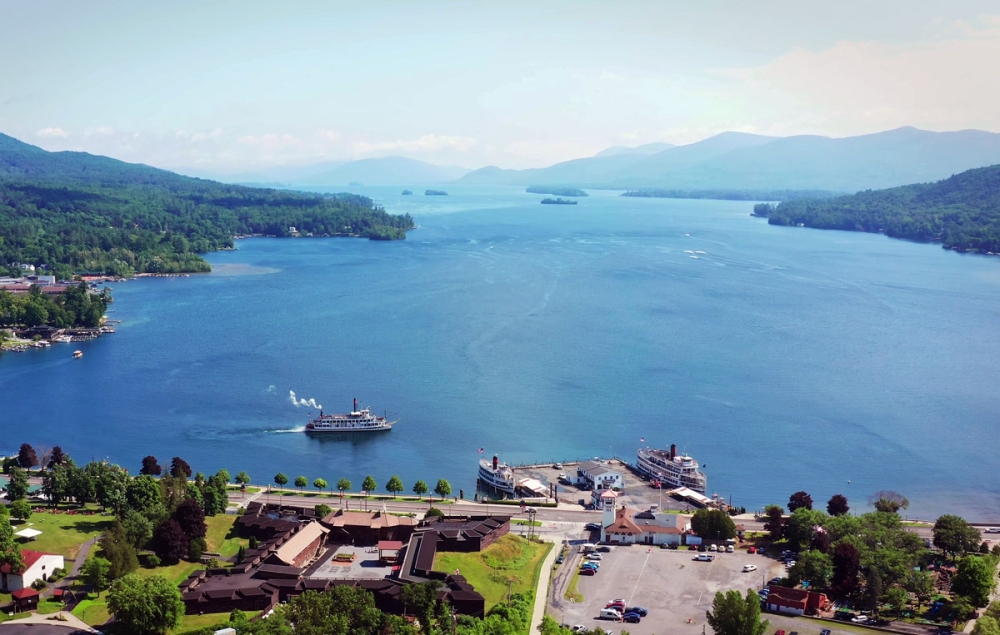
Lake George in upstate New York is often called the “Queen of American Lakes” because of its exceptional clarity and scenic setting in the Adirondack Mountains. For generations, residents and visitors have prized its transparent waters, vibrant fisheries, and tourism economy. Yet in recent decades, a less visible threat has been steadily accumulating in the lake and its tributaries, road salt. The widespread use of rock salt as a winter de icing agent on highways and local roads has contributed to rising chloride levels in Lake George and in freshwater systems across the northern United States.
Rock salt, chemically known as sodium chloride, is the most common winter de icing material used by transportation departments. It is inexpensive, widely available, and effective at lowering the freezing point of water. When spread on icy pavement, salt dissolves into brine, which prevents ice from bonding to the road surface and helps melt existing ice and snow. This improves traction and reduces accidents, making it an essential public safety tool in snowy regions like upstate New York.
Municipalities favor rock salt because it works reliably at moderate winter temperatures, it can be stored in large quantities, and it is easy to apply with standard spreader equipment. From a winter maintenance perspective, it is difficult to match its cost effectiveness. However, the environmental tradeoffs are significant.
Once applied, road salt does not simply disappear when the snow melts. Instead, it dissolves and travels with runoff into roadside soils, storm drains, streams, and eventually lakes. In the Lake George watershed, winter meltwater carries chloride into tributaries and directly into the lake itself.
Unlike many pollutants, chloride does not break down or evaporate. It persists in the environment. Over time, this leads to increasing concentrations in freshwater systems. Elevated chloride levels can have several harmful effects.
First, chloride can alter the density structure of a lake. In deep lakes such as Lake George, dense salt laden water can sink to the bottom, disrupting natural mixing cycles. This can reduce oxygen levels in deeper waters, stressing cold water fish species and other aquatic life.
Second, chloride is toxic to many freshwater organisms at relatively low concentrations. Amphibians, aquatic insects, and zooplankton are particularly sensitive. These species form the base of the aquatic food web. When they decline, fish populations and overall ecosystem balance can suffer.
Third, sodium from road salt can displace beneficial minerals in soils, degrading soil structure and increasing erosion. Runoff then carries additional sediments and nutrients into the lake, compounding water quality problems.
Long term exposure to elevated chloride also poses concerns for drinking water supplies. While Lake George is known for its high quality water, rising salt levels threaten that reputation and may require more costly treatment in the future.
Several organizations are actively working to reduce road salt impacts in the Lake George watershed.
The Lake George Association has been at the forefront of water quality monitoring and advocacy. It conducts scientific studies to track chloride levels, works with municipalities to improve salt management practices, and educates the public about responsible winter maintenance.
The Lake George Waterkeeper, affiliated with Waterkeeper Alliance, advocates for stronger regulatory oversight and supports community initiatives aimed at reducing pollution entering the lake. It raises awareness about the cumulative impacts of salt and encourages policy reforms.
The FUND for Lake George invests in innovative solutions and research projects. It supports pilot programs that test improved de icing techniques, real time road condition monitoring, and data driven salt application strategies designed to reduce unnecessary use.
The New York State Department of Environmental Conservation plays a regulatory and advisory role, establishing water quality standards and collaborating with local governments on best management practices. State agencies have increasingly acknowledged the need to balance winter safety with environmental protection.
Together, these organizations promote what is often called “smart salting.” This approach includes calibrating spreaders to apply precise amounts, pre wetting salt to make it stick to pavement, using brine solutions before storms to prevent ice bonding, and training operators in efficient application methods. The goal is not to eliminate winter maintenance, but to reduce excess salt that provides little additional safety benefit.
A central question is whether the environmental damage caused by road salt is reversible. The answer is complex.
Chloride does not degrade naturally. Once it enters a lake, it can remain for decades. If salt inputs were drastically reduced, chloride concentrations would likely decline over time through dilution and gradual flushing, especially in lakes with significant outflow. However, the process can be slow.
In some freshwater systems, sustained reductions in salt use have stabilized or slightly lowered chloride levels. This suggests that action can prevent further degradation and may allow partial recovery. Yet if chloride concentrations exceed certain ecological thresholds for extended periods, some species may not easily return.
For Lake George, which still maintains relatively high water quality compared to many urban lakes, early intervention is critical. Preventing further increases is far easier than attempting to reverse entrenched contamination.
Communities have explored several alternatives to traditional rock salt, though each has limitations.
Calcium chloride and magnesium chloride are effective at lower temperatures, but they still contribute chloride to waterways. They may reduce total quantities needed, yet they are not chloride free solutions.
Organic additives such as beet juice blends can improve the performance of salt, allowing lower application rates. These products help salt adhere to pavement and remain effective longer. However, they are typically supplements rather than replacements.
Sand can improve traction without adding chloride, but it does not melt ice and can clog storm drains, increase sediment in water bodies, and require spring cleanup.
More advanced strategies focus on technology and management rather than entirely new chemicals. Brine pre treatment, pavement temperature sensors, and weather responsive spreading systems can significantly cut salt usage while maintaining road safety. In some cases, heated pavement systems have been tested, though they are expensive and energy intensive.
Ultimately, the most promising path forward appears to be a combination of reduced application, improved precision, public education, and targeted use of alternatives where appropriate.
Winter road maintenance is a public safety necessity in snowy regions like upstate New York. However, the environmental cost of unchecked salt application is increasingly clear. Rising chloride levels threaten aquatic ecosystems, drinking water quality, and the long term health of treasured lakes such as Lake George.
The collaborative efforts of the Lake George Association, Lake George Waterkeeper, The FUND for Lake George, and state agencies demonstrate that progress is possible. Through better science, smarter practices, and community engagement, it is feasible to maintain safe roads while safeguarding water quality.
The damage from decades of salt use is not easily erased, but it is not beyond influence. With sustained commitment and innovation, Lake George can remain worthy of its reputation for clarity and beauty, even in a region where winter demands resilience.