Deprecated: Constant E_STRICT is deprecated in /home/drainage/public_html/admin/header.php on line 39
System Components & Structures

System Components & Structures

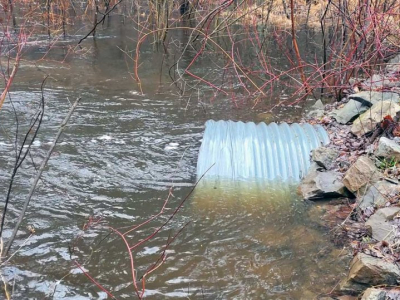
A galvanized steel culvert inundated with flood waters.

The Hidden Costs of Undersized Culverts: How Small Openings Create Big Watershed Problems

Culverts are among the most common pieces of stormwater and roadway infrastructure in the United States, yet they often receive far less attention than they deserve. When properly sized and maintained, culverts allow water to move freely beneath roads, driveways, trails, and rail lines. When they ar…

continue
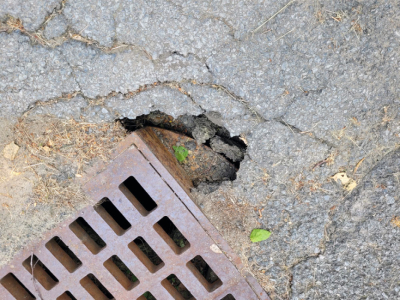
Hole in asphalt road surface next to stormwater catch basin grate.

Common Points of Failure in Rural Stormwater Drainage Systems

Stormwater drainage systems are among the most critical yet overlooked components of rural infrastructure. Hidden beneath roads, driveways, fields, and stream crossings, culverts and drainage pipes quietly transport runoff away from roadways and developed areas. Many rural drainage systems were inst…

continue
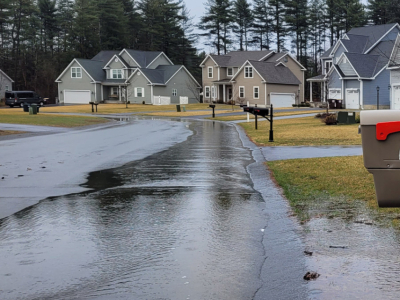
Paved wing swale retaining water on road surface

Why Some Roads Have “Wings”: Rethinking How We Move Stormwater

*Author's note: The primary image paired with this article depicts a road with a paved wing - Richmond Hill Drive in Queensbury, NY, to be precise - while flooded during a pre-thaw heavy rain event. A winged road with adequate drainage would not normally retain that amount of stormwater. If you …

continue
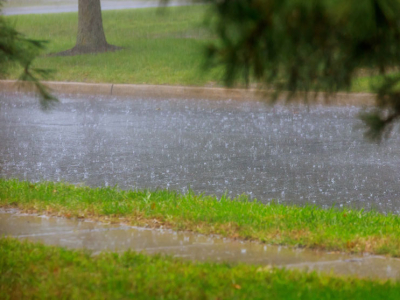
Flooded road during heavy rain

Choosing Between a Catch Basin and Pipe System or a Dry Well: Making the Right Call for Stormwater Drainage

When addressing a drainage problem, one of the most important decisions is whether to move water away through a traditional catch basin and pipe system or to manage it on-site using a dry well. Both approaches are widely used and effective when applied in the right context, but selecting the wrong s…

continue
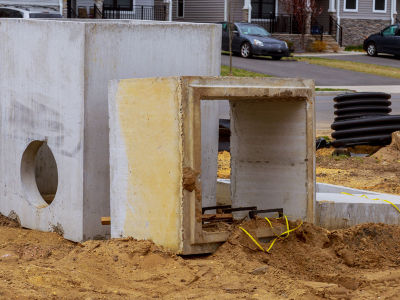
Concrete catch basin and riser resting in sand next to a stormwater drainage project.

Installing a Catch Basin: A Step-by-Step Guide

Is a Catch Basin Appropriate Here? Before a catch basin is installed, it is important to step back and ask a simple but often overlooked question, what purpose is it actually going to serve at this location? Catch basins are frequently installed out of habit or because “there has always been o…

continue
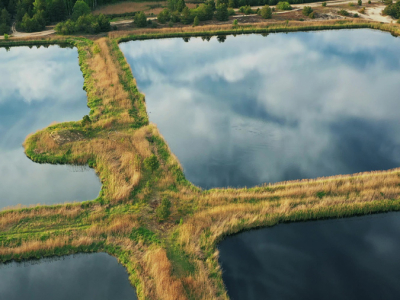
Overhead view of large stormwater detention ponds.

Retention vs. Detention Ponds, Understanding the Differences and Why They Matter

Retention and detention ponds are among the most recognizable features of modern stormwater management systems, yet they are often misunderstood or used interchangeably. While both are designed to manage runoff and protect downstream infrastructure, they serve distinct purposes and function in very …

continue
An engineer inspects a large damaged HDPE culvert pipe covered in sediment.

Common Causes of HDPE Culvert Pipe Failure in Roadway and Stormwater Applications

High density polyethylene, commonly referred to as HDPE, has become a widely used material for culvert pipe applications because it is lightweight, corrosion resistant, and relatively easy to install. In roadway and stormwater infrastructure, HDPE culverts are frequently selected as an alternative t…

continue
An open channel swale running through grasslands.

Open Channel Outfalls - Practical Stormwater Treatment for Municipal Systems

Open channel outfalls occupy a unique space in stormwater infrastructure. They are simple in appearance, often nothing more than a vegetated swale or gently graded channel, yet when properly designed they function as treatment systems, flow control measures, and in northern climates even snow manage…

continue
A stockpile of HDPE culvert pipes and junctions.

Culvert Material Choices and Their Best Uses in Modern Stormwater Systems

Stormwater culverts come in a wide range of materials, and each type carries a unique combination of strength, lifespan, cost, and installation considerations. Choosing the right material is not a one size fits all choice, because every site presents different soil conditions, hydraulic needs, envir…

continue
An old outfall pipe seen with a concrete headwall.

Stormwater Outfall Data Requirements, What Must Be Recorded and Why It Matters

A well managed stormwater program depends on accurate and complete information about every outfall in a community. Outfalls are the final discharge points where stormwater leaves the municipal system and enters a stream, lake, wetland, or other receiving water. Because these locations represent the …

continue
View of the sun setting over a marsh area in constructed wetlands.

What Are Constructed Wetlands?

Constructed wetlands are engineered systems that mimic the natural processes of a real wetland in order to treat stormwater, wastewater, or other polluted runoff. They are intentionally designed and built rather than formed through natural hydrology, but they function in much the same way. Water flo…

continue
A worker kneels inside a large HDPE culvert pipe awaiting installation.

Culvert Fundamentals: A Practical Overview for Municipal Stormwater Systems

Culverts are enclosed conduits that carry surface water beneath roads, railways, trails, and embankments, allowing drainage and traffic to coexist safely. They form one of the most common, and often most overlooked, structures in municipal stormwater networks. When sized, installed, and maintained c…

continue