

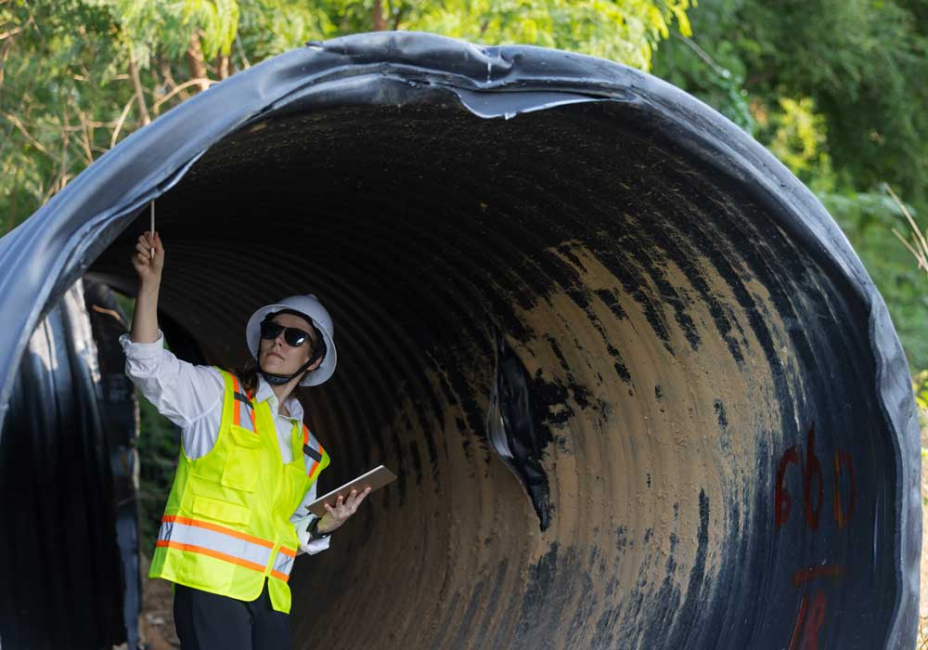
High density polyethylene, commonly referred to as HDPE, has become a widely used material for culvert pipe applications because it is lightweight, corrosion resistant, and relatively easy to install. In roadway and stormwater infrastructure, HDPE culverts are frequently selected as an alternative to reinforced concrete or corrugated metal pipe. When properly designed and installed, they can provide decades of service. However, like any infrastructure component, HDPE culvert pipes can fail. Understanding the common causes of failure is essential for municipalities, contractors, and engineers who are responsible for long term performance.
Sunlight exposure is one factor that can compromise HDPE pipe performance, particularly before installation.
HDPE is susceptible to ultraviolet degradation. (Aren't we all?) Manufacturers typically incorporate carbon black and other UV inhibitors into the material to slow this process, but prolonged exposure to direct sunlight can still reduce surface strength and flexibility. When pipes are stored on site for extended periods without protective covering, the outer wall may become brittle. In extreme cases, this can lead to cracking during handling or installation. Although short term exposure is generally acceptable, improper storage practices increase the risk of premature deterioration before the pipe ever enters service.
Improper installation is another leading cause of HDPE culvert failure.
Unlike rigid materials such as reinforced concrete, HDPE culverts are flexible conduits. Their structural capacity depends heavily on the surrounding soil for support. If trench preparation is inadequate, if bedding is uneven, or if backfill is not placed and compacted in proper lifts, the pipe can deform excessively. Excessive deflection reduces hydraulic capacity and can eventually cause buckling or wall cracking. In roadway applications, improper compaction around the haunches, the area between the bedding and springline of the pipe, is particularly problematic. Without sufficient side support, traffic loads are transferred directly to the pipe wall instead of being distributed through the soil envelope.
Inadequate earthen cover above the culvert is closely related to installation quality.
Manufacturers specify minimum cover depths based on pipe diameter, wall profile, and anticipated live loads. When the soil cover is too shallow, vehicle loads are not sufficiently dispersed before reaching the pipe. This can result in localized crushing, ovalization, or long term creep deformation. Shallow installations are especially vulnerable during construction when heavy equipment passes over the site. In some cases, erosion or washouts can reduce cover after installation, exposing the pipe crown and leading to accelerated damage.
Hydraulic conditions can also contribute to failure. High velocity flows, debris impact, or sediment abrasion may damage inlet and outlet ends. Scour around the pipe can undermine bedding and remove lateral support, creating voids that allow the pipe to shift or settle. If headwalls or end treatments are not properly constructed, water can bypass the pipe and erode surrounding embankment material, eventually leading to roadway settlement or collapse.
Material selection errors represent another potential risk. Not all HDPE pipes are designed for the same loading conditions. Using a pipe with insufficient stiffness for deep burial or heavy traffic applications can result in excessive long term deflection. Similarly, chemical exposure in certain industrial or agricultural environments may affect material properties if the pipe is not rated for those conditions. While HDPE is resistant to many corrosive agents, compatibility should always be confirmed during design.
Thermal effects and long term creep behavior must also be considered. HDPE expands and contracts with temperature fluctuations more than rigid materials do. If expansion allowances are not accounted for, particularly in above ground or partially exposed installations, joints may separate or stresses may develop at connections. Over time, sustained loads can cause gradual deformation. While this behavior is anticipated in design, insufficient soil support or higher than expected loads can accelerate creep and reduce service life.
Finally, maintenance neglect can turn minor issues into major failures. Sediment buildup may increase hydraulic pressure during storm events. Rodent burrowing, root intrusion near joints, and repeated freeze thaw cycles can all degrade surrounding soil support. Regular inspection programs, especially in municipal stormwater systems, help identify early warning signs such as excessive deflection, joint separation, or embankment settlement.
HDPE culvert pipes offer many advantages in drainage infrastructure, but their performance depends on thoughtful design, proper storage, correct installation, and ongoing maintenance. Sunlight exposure prior to installation, inadequate earthen cover, poor compaction, hydraulic scour, and inappropriate material selection are among the most common factors that contribute to failure. When these risks are addressed through sound engineering practice and field oversight, HDPE culverts can deliver reliable, long term service under a wide range of roadway and stormwater conditions.