Articles Tagged: Stormwater Maintenance

The Value of Vigilance: How Road Crews Prevent Culvert Failures Before They Happen

The Value of Vigilance: How Road Crews Prevent Culvert Failures Before They Happen

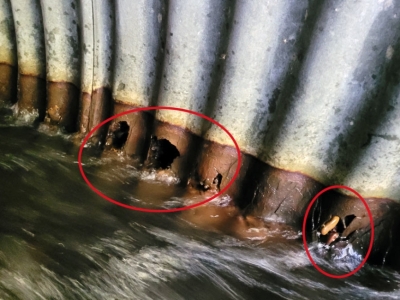
In stormwater management, some of the most serious failures begin as subtle warning signs that are easy to overlook unless someone is paying close attention. A cross culvert that appears nearly full on a dry day, with no recent rainfall to explain elevated water levels, is one of those warning signs…

continue
Small Streams, Big Consequences: Why Culvert Replacement Requires More Than a Pipe Swap

Small Streams, Big Consequences: Why Culvert Replacement Requires More Than a Pipe Swap

Across towns and counties, road departments replace cross culverts every day. The motivation is usually sound. Aging pipes fail without warning, and a collapse beneath the roadway can create a serious safety hazard, not to mention an expensive emergency repair. Proactive replacement is responsible a…

continue
Infiltration BMP Inspections After Major Storms – A 24-Hour Checklist

Infiltration BMP Inspections After Major Storms – A 24-Hour Checklist

Infiltration-based best management practices, or BMPs, are designed to capture, store, and gradually infiltrate stormwater into the ground. These systems, which include bioretention basins, infiltration trenches, dry wells, and porous pavement systems, are particularly vulnerable during and immediat…

continue
Vegetation Management Around Culverts: Balancing Access with Ecosystem Health

Vegetation Management Around Culverts: Balancing Access with Ecosystem Health

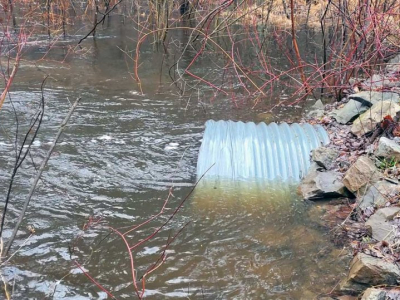
Culverts are often out of sight and, as a result, out of mind, until they fail. When they do fail, the consequences can range from nuisance flooding to full roadway washouts. One of the most overlooked factors in culvert performance is vegetation management. Too little control can obstruct flow and …

continue
Planning Ahead: Managing Stormwater Infrastructure Before It Fails

Planning Ahead: Managing Stormwater Infrastructure Before It Fails

Municipal stormwater systems tend to operate quietly in the background, doing their job year after year with little attention. Pipes carry flows, culverts pass streams beneath roads, catch basins collect runoff, and ditches guide water away from infrastructure. Because these systems are largely out …

continue
Stop Leaving Money on the Table, How Engineering Firms Can Unlock Funding for Your Infrastructure Projects

Stop Leaving Money on the Table, How Engineering Firms Can Unlock Funding for Your Infrastructure Projects

Municipal leaders and highway departments are under constant pressure to maintain aging infrastructure with limited local budgets. Culverts fail, roads deteriorate, and drainage systems quietly reach the end of their useful life, often without the funding needed to address them. Yet, while many muni…

continue
How to Score and Prioritize Failing Outfalls Before They Fail You

How to Score and Prioritize Failing Outfalls Before They Fail You

Stormwater outfalls are the final point where a drainage system releases water into a receiving body such as a stream, river, wetland, or lake. Because they sit at the end of the system, they are often overlooked until a visible failure occurs. When an outfall collapses or erodes, the consequences c…

continue
Common Causes of HDPE Culvert Pipe Failure in Roadway and Stormwater Applications

Common Causes of HDPE Culvert Pipe Failure in Roadway and Stormwater Applications

High density polyethylene, commonly referred to as HDPE, has become a widely used material for culvert pipe applications because it is lightweight, corrosion resistant, and relatively easy to install. In roadway and stormwater infrastructure, HDPE culverts are frequently selected as an alternative t…

continue
Safe Entry Starts Before the Hatch, A Step by Step Guide to Confined Space Awareness and Structure Assessment

Safe Entry Starts Before the Hatch, A Step by Step Guide to Confined Space Awareness and Structure Assessment

Opening and entering drainage structures requires a practiced, methodical approach that protects workers from unseen dangers and ensures that every step is guided by awareness, communication, and control. These environments can hold toxic gases, low oxygen levels, and unexpected structural weaknesse…

continue
The Fundamentals of Field Inspections for Catch Basins, Culverts, and Outfalls.

The Fundamentals of Field Inspections for Catch Basins, Culverts, and Outfalls.

Field inspections of catch basins, manholes, culverts, and outfalls form the foundation of responsible stormwater management. These routine checks give municipalities an ongoing view of the condition of their drainage network and allow crews to identify issues long before they become flooding hazard…

continue
Recognizing Early Signs of Habitat Disruption Around Drainage Structures

Recognizing Early Signs of Habitat Disruption Around Drainage Structures

Habitat disruption around drainage structures is often subtle at first, and many of the earliest signs tend to appear during ordinary field work rather than during formal environmental surveys. Because highway departments and public works crews encounter these locations regularly, they are in the be…

continue
Maintaining Stormwater Drainage Assets with Modern Management Software

Maintaining Stormwater Drainage Assets with Modern Management Software

*The screenshots used in this article are from Roadwurx, an asset management software created for road maintenance departments. Managing a town’s stormwater system can quickly become overwhelming when maintenance and inspection records are scattered across clipboards, spreadsheets, or dusty fi…

continue