

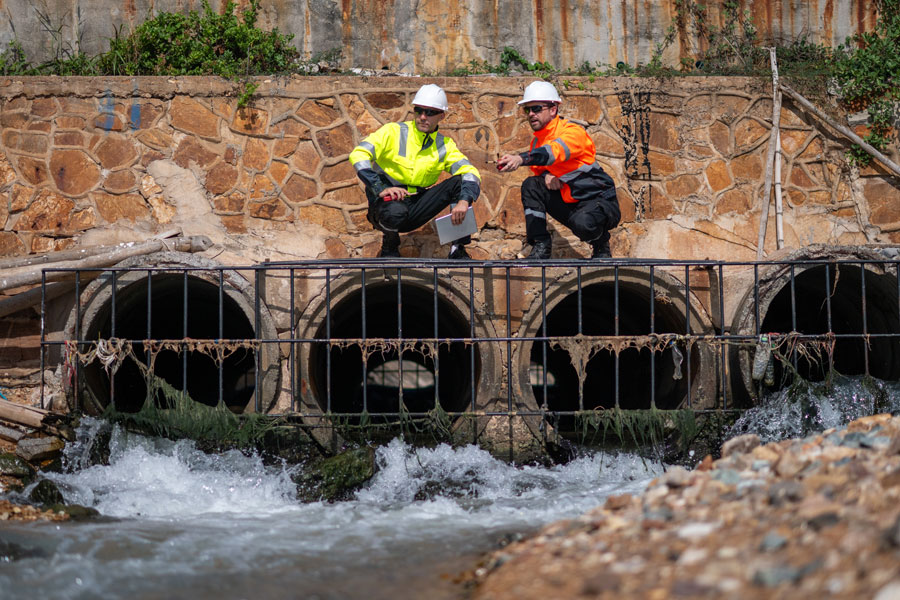
Municipal stormwater systems tend to operate quietly in the background, doing their job year after year with little attention. Pipes carry flows, culverts pass streams beneath roads, catch basins collect runoff, and ditches guide water away from infrastructure. Because these systems are largely out of sight, they are also often out of mind. That is, until something fails. By then, the cost is no longer measured in routine maintenance dollars, but in emergency repairs, road closures, public frustration, and strained municipal budgets. This is why long-range planning, grounded in asset management, is not just beneficial but essential.
Every municipality owns far more stormwater infrastructure than it typically accounts for in a meaningful way. Cross-culverts, driveway pipes, headwalls, manholes, storm sewers, detention structures, and open channels are all part of a network that is constantly aging. Each component is exposed to weather, sediment, corrosion, hydraulic stress, and in many cases, traffic loads that may exceed what was originally anticipated. Increasing rainfall intensity and changing land use patterns only add to the strain. What was once an adequate design may now be undersized or structurally vulnerable.
Asset management provides a framework to confront this reality. It begins with a comprehensive inventory of all stormwater assets, followed by an honest assessment of their condition and remaining service life. This process often reveals uncomfortable truths. Infrastructure that appears to be functioning may, in fact, be nearing failure. Improvised solutions, such as a series of stacked small-diameter culvert pipes added over time, may technically pass water under normal conditions but represent a significant risk during larger storm events. In such cases, the issue is not just capacity but constructability and long-term reliability. A single, properly designed culvert would have been more efficient, easier to maintain, and less prone to failure.
Routine inspection is the backbone of any effective stormwater management program. Annual inspections of all assets should be the baseline, ensuring that municipalities maintain a current understanding of system conditions. Older infrastructure, or assets known to be substandard from the outset, should be inspected more frequently. These are the locations most likely to fail and the ones that should already be on a watch list. Inspections should not be treated as a formality, but as an opportunity to identify early warning signs such as joint separation, invert deterioration, sediment buildup, blockage, or structural deformation.
Planning must extend beyond inspection into proactive replacement scheduling. It is far more cost-effective to replace a culvert on a planned basis than to respond to a failure. When a cross-culvert collapses, the consequences are immediate and disruptive. Roads may need to be closed entirely, detours established, and emergency contracts issued at a premium cost. Engineering design, environmental permitting, and construction all occur under pressure, often leading to less-than-ideal outcomes. In contrast, a planned replacement allows for proper design, competitive bidding, coordination with other infrastructure projects, and clear communication with the public.
Budgeting plays a central role in this process. Municipalities must move away from reactive spending and toward predictable, programmed investment in infrastructure. This requires setting aside funds annually for inspection, maintenance, and capital replacement. While it can be difficult to justify spending money on infrastructure that has not yet failed, the alternative is almost always more expensive. Deferred maintenance and delayed replacement do not eliminate costs, they simply transfer them into the future, often with added urgency and higher price tags.
Ultimately, effective stormwater management is about stewardship. It requires municipalities to take a long view, recognizing that today’s decisions will shape the reliability and safety of infrastructure for decades to come. When everything is working fine, that is precisely the time to plan. By embracing asset management, committing to regular inspections, and budgeting for timely replacements, municipalities can avoid the cycle of crisis response and instead build a resilient, dependable stormwater system that serves their communities well into the future.