Where Stormwater Strategy Meets Practical Guidance

CCTV Drainage Inspection Services: What They Involve and Why Municipalities Use Them

CCTV Drainage Inspection Services: What They Involve and Why Municipalities Use Them

Closed-circuit television, or CCTV, drainage inspection has become one of the most effective tools available to municipalities for understanding the true condition of their buried stormwater infrastructure. Unlike surface inspections, which can only reveal limited information, CCTV inspections provi…

continue
Creating a Photo-Log for MS4 Compliance: Equipment, Metadata, and Storage Tips

Creating a Photo-Log for MS4 Compliance: Equipment, Metadata, and Storage Tips

Municipal Separate Storm Sewer System, or MS4, compliance is built on documentation. Whether you are demonstrating outfall inspections, tracking illicit discharge investigations, or verifying maintenance activities, a well-organized photo-log can be one of the most effective and defensible tools in …

continue
Infiltration BMP Inspections After Major Storms – A 24-Hour Checklist

Infiltration BMP Inspections After Major Storms – A 24-Hour Checklist

Infiltration-based best management practices, or BMPs, are designed to capture, store, and gradually infiltrate stormwater into the ground. These systems, which include bioretention basins, infiltration trenches, dry wells, and porous pavement systems, are particularly vulnerable during and immediat…

continue
The Hidden Costs of Fire Hydrant Flushing: Understanding the Negative Impacts

The Hidden Costs of Fire Hydrant Flushing: Understanding the Negative Impacts

Fire hydrant flushing is a common and often necessary practice for maintaining water distribution systems. Municipalities flush hydrants to remove sediment, verify system performance, and ensure adequate flow for firefighting. While these objectives are important, the practice can carry a range of u…

continue
Choosing Between a Catch Basin and Pipe System or a Dry Well: Making the Right Call for Stormwater Drainage

Choosing Between a Catch Basin and Pipe System or a Dry Well: Making the Right Call for Stormwater Drainage

When addressing a drainage problem, one of the most important decisions is whether to move water away through a traditional catch basin and pipe system or to manage it on-site using a dry well. Both approaches are widely used and effective when applied in the right context, but selecting the wrong s…

continue
Stormwater Asset Management and MS4 Compliance - Connecting the Dots

Stormwater Asset Management and MS4 Compliance - Connecting the Dots

Municipal Separate Storm Sewer System programs, commonly referred to as MS4 programs, are often viewed as regulatory obligations, while stormwater asset management is treated as an operational necessity. In reality, these two efforts are deeply interconnected. When properly aligned, a strong asset m…

continue
Installing a Catch Basin: A Step-by-Step Guide

Installing a Catch Basin: A Step-by-Step Guide

Is a Catch Basin Appropriate Here? Before a catch basin is installed, it is important to step back and ask a simple but often overlooked question, what purpose is it actually going to serve at this location? Catch basins are frequently installed out of habit or because “there has always been o…

continue
What Is That Foam on the Water?

What Is That Foam on the Water?

Understanding Natural vs. Problematic Foam in Streams, Channels, and Lakes If you spend enough time around streams, roadside ditches, or lakes, you will eventually notice patches of foam collecting along the edges or drifting in slow-moving water. For many people, the immediate assumption is that th…

continue
Sediment Build-Up and Its Effects on Water Quality and Habitat

Sediment Build-Up and Its Effects on Water Quality and Habitat

A Look at the English Brook Delta in Lake George, New York Sediment is a natural part of any water system, but when it accumulates faster than a system can handle, it begins to change the waterbody in ways that are both visible and subtle. Excess sediment alters water clarity, transports nutrients, …

continue
Vegetation Management Around Culverts: Balancing Access with Ecosystem Health

Vegetation Management Around Culverts: Balancing Access with Ecosystem Health

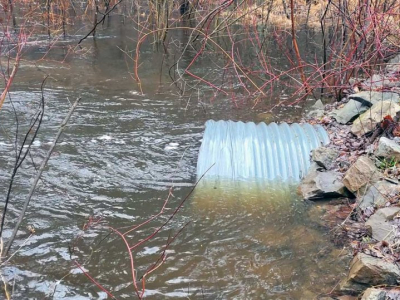
Culverts are often out of sight and, as a result, out of mind, until they fail. When they do fail, the consequences can range from nuisance flooding to full roadway washouts. One of the most overlooked factors in culvert performance is vegetation management. Too little control can obstruct flow and …

continue
Why Every Road Crew Member Must Understand Stormwater Management

Why Every Road Crew Member Must Understand Stormwater Management

Municipal road crews are on the front lines of stormwater management whether they realize it or not. Every ditch they shape, every culvert they install, and every roadside repair they complete has a direct impact on how water moves across the landscape. Yet in many public works departments, stormwat…

continue
Planning Ahead: Managing Stormwater Infrastructure Before It Fails

Planning Ahead: Managing Stormwater Infrastructure Before It Fails

Municipal stormwater systems tend to operate quietly in the background, doing their job year after year with little attention. Pipes carry flows, culverts pass streams beneath roads, catch basins collect runoff, and ditches guide water away from infrastructure. Because these systems are largely out …

continue