

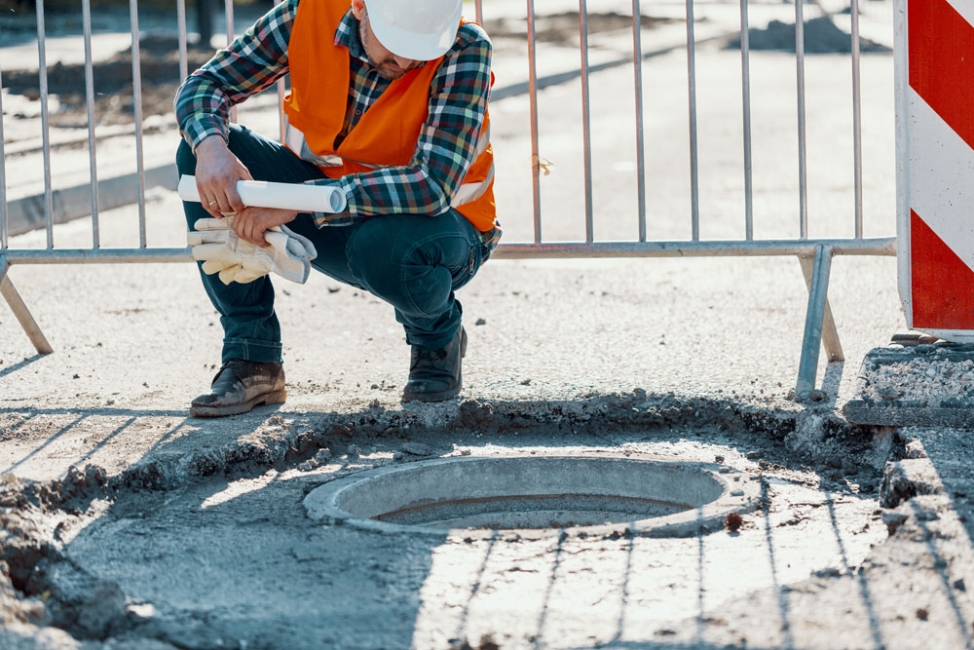
Opening and entering drainage structures requires a practiced, methodical approach that protects workers from unseen dangers and ensures that every step is guided by awareness, communication, and control. These environments can hold toxic gases, low oxygen levels, and unexpected structural weaknesses. They often meet the definition of a confined space, which means that even a moment of carelessness can have serious consequences. A safe entry begins long before anyone steps inside, and departments that build consistent routines tend to avoid the near misses and injuries that stem from rushing or improvisation.
The first step is to treat every structure as a potential confined space. Crews should begin with a visual inspection from the outside, checking for signs of damage, debris accumulation, animal activity, or suspicious odors. This initial assessment allows workers to pause, think, and slow the process down. Before any cover is moved, the team should gather briefly to confirm the plan, assign roles, and identify what hazards they expect. Clear communication at this stage sets the tone for the rest of the entry. When everyone understands who will monitor the air, who will handle the cover, and who will maintain a safe perimeter, the work becomes safer and more predictable.
Cover removal must be deliberate. Workers should use proper lifting tools and maintain good body positioning to avoid injuries. Once the structure is open, no one should lean directly over the opening or immediately attempt to enter. Many hazardous atmospheres are heavier or lighter than air and can briefly create invisible zones of danger near the surface. The gas monitor/detector - often referred to as 4 gas monitor - should be activated and allowed to run for a moment so that its internal sensors stabilize. When ready, the monitor must be lowered carefully into the structure, keeping it well away from the operator’s breathing zone while allowing it to sample at various levels. This is important because toxic gases or low oxygen pockets can stratify, and a single reading at the rim does not tell the full story. Crews should not rely on smell or instinct. Only a properly calibrated gas monitor can confirm whether the air is safe enough for entry.
When the monitor reports safe conditions, workers still need to maintain constant awareness. Gas levels can change after ventilation, after movement inside the structure, or as weather shifts. A second crew member should remain outside the entry point to act as an attendant. This person’s job is not simply to watch but to act as the communication link, the safety check, and the immediate responder if anything goes wrong. Radio or verbal communication must remain open and clear. The entrant should describe what they see, what they are doing, and whether anything appears unstable. The attendant should periodically confirm that gas readings remain safe and that the entrant is responding normally.
Inside the structure, movement should be slow and controlled. Workers should test any footing before committing weight and avoid disturbing debris that could shift or release trapped gases. They should look for signs of corrosion, undermining, separated joints, or anything that suggests the structure is compromised. If any condition feels uncertain, the entrant should back out and report the concern instead of trying to push forward. A safe exit is just as important as a safe entry, and communication during this phase is vital. The attendant should be ready to help guide the worker out, relay readings from the monitor, and confirm that the atmosphere has not changed.
Once the inspection is complete, crews should secure the cover carefully and review the findings while the observations are fresh. The team can quickly discuss what went well and whether anything needs to be improved for the next entry. This habit reinforces a culture of deliberate action and encourages workers to remain aware of the risks that confined spaces present.
In some situations, crews may determine that a full rescue tripod with a winch and an air blower is not only helpful but necessary for a safe entry. Certain structures have deeper drops, limited movement, or a history of poor ventilation, and these conditions call for equipment that can prevent a minor incident from becoming an emergency. A tripod and winch allow an attendant to retrieve an entrant quickly without having to enter the hazard zone, which is essential in a confined space emergency where a second victim can be created in seconds. An air blower can also make a significant difference by pushing fresh air into the structure and dispersing lingering gases before anyone climbs inside. Although not required for every entry, this equipment should always be available and ready for use whenever conditions suggest that the risks are higher than usual.
By approaching every structure with respect, using gas monitors consistently, and keeping communication constant, crews can reduce risks dramatically. Safe entry is not a single action but a practiced sequence that depends on discipline and teamwork. When workers follow these steps, they protect themselves, their coworkers, and their communities while carrying out one of the most hazardous but essential tasks in field operations.