

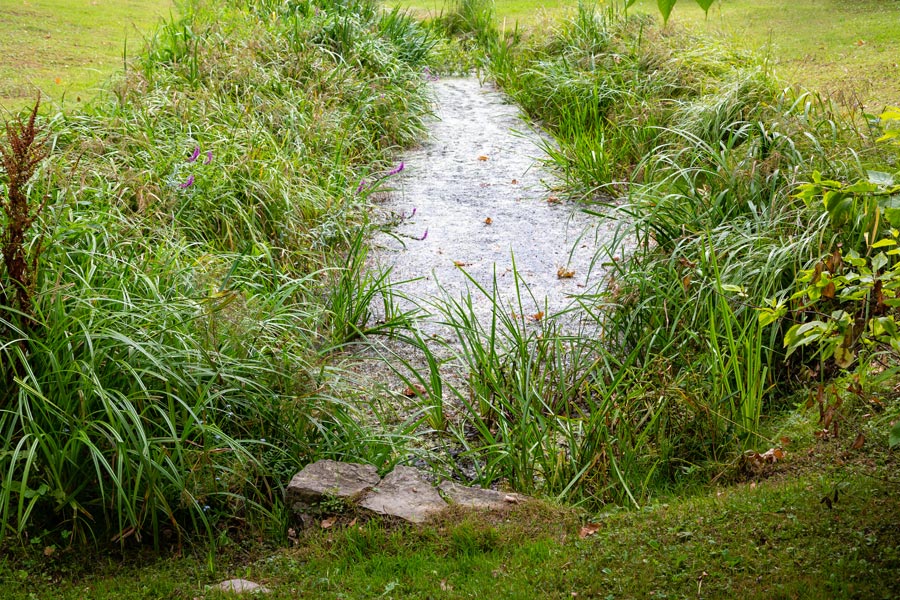
Culverts are often out of sight and, as a result, out of mind, until they fail. When they do fail, the consequences can range from nuisance flooding to full roadway washouts. One of the most overlooked factors in culvert performance is vegetation management. Too little control can obstruct flow and block access for inspection and maintenance. Too much clearing can destabilize banks, degrade habitat, and accelerate erosion. The goal is not to eliminate vegetation, but to manage it intelligently so that both infrastructure and the surrounding ecosystem remain healthy.
A properly vegetated culvert site is not a barren ditch, nor is it an overgrown thicket. It is a controlled environment where plant growth supports slope stability and water quality while still allowing crews to safely access, inspect, and maintain the structure. Striking this balance requires understanding how vegetation interacts with water, soil, and infrastructure over time.
Vegetation plays a critical role in stabilizing soil around culverts. Root systems bind soil together, reducing the risk of erosion at the inlet and outlet. This is particularly important during high-flow events, when unprotected soils can quickly wash away, undermining the culvert and leading to structural failure. Grasses and low-growing plants are especially valuable in these areas because they provide coverage without significantly impeding flow or access. In contrast, large woody vegetation growing too close to the culvert can create problems. Tree roots can displace headwalls or pipes, and fallen branches can clog the inlet, leading to debris jams and overtopping.
Access is another key consideration. Maintenance crews need to be able to reach culverts quickly and safely, often with equipment. Overgrown vegetation can obscure the location of the culvert, hide hazards such as unstable ground or steep drop-offs, and slow response times during storms. Establishing and maintaining a clear access path, typically a defined corridor leading to the inlet and outlet, is essential. This does not mean clearing the entire area, but rather creating intentional access routes while leaving surrounding vegetation intact where it provides ecological or structural benefits.
Selective clearing is the most effective approach. Instead of wholesale removal, crews should focus on removing vegetation that directly interferes with flow or infrastructure. This includes saplings and brush growing in the flow line, invasive species that tend to dominate and clog waterways, and any vegetation that obstructs visibility of the culvert entrance. At the same time, desirable vegetation, such as native grasses and deep-rooted plants that stabilize banks, should be preserved or even encouraged.
Timing matters as well. Vegetation management activities should be scheduled to minimize environmental impact. For example, mowing or clearing during nesting seasons can disrupt wildlife, and working in saturated conditions can lead to soil compaction and damage to root systems that are otherwise beneficial. Planning maintenance during drier periods, and outside of sensitive ecological windows, helps protect both the site and the surrounding habitat.
There is also a water quality component to consider. Vegetation acts as a natural filter, capturing sediment, nutrients, and pollutants before they enter the culvert system. Removing too much vegetation can increase runoff velocity and reduce this filtering effect, leading to downstream impacts such as sedimentation and degraded aquatic habitats. Maintaining a buffer of vegetation around the culvert, particularly downstream, helps preserve these benefits while still allowing for functional infrastructure.
From an operational standpoint, vegetation management should be part of a broader asset management strategy. Culverts should be regularly inspected, and vegetation conditions should be documented alongside structural assessments. Over time, patterns will emerge, certain sites may consistently experience rapid regrowth or debris accumulation, indicating a need for more frequent attention or a different management approach. Integrating vegetation management into routine maintenance schedules ensures that it is proactive rather than reactive.
In many cases, the biggest challenge is not technical, but cultural. There is a tendency to either ignore vegetation until it becomes a problem or to overcorrect by clearing everything in sight. Both approaches are short-sighted. Effective vegetation management requires a mindset that recognizes the value of vegetation as part of the system, not just an obstacle to be removed.
Training plays a significant role here. Crews should understand why certain vegetation is left in place, why other growth is removed, and how their actions affect both the infrastructure and the environment. When crews are equipped with this knowledge, they are more likely to make informed decisions in the field, rather than defaulting to the quickest or most familiar approach.
Ultimately, vegetation management around culverts is about balance. A well-managed site supports hydraulic performance, ensures safe and efficient access for maintenance, and contributes to the overall health of the surrounding ecosystem. By taking a thoughtful, selective approach, municipalities can extend the life of their culverts, reduce maintenance costs, and avoid unintended environmental consequences.