

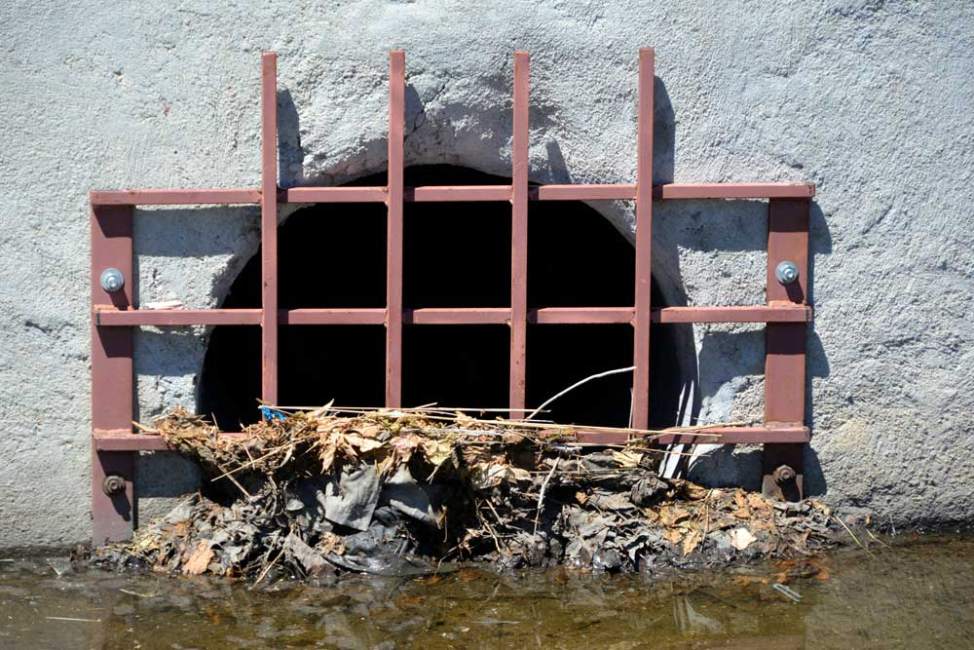
Headwall is a structural component installed at the inlet or outlet of a culvert, pipe, or closed-conduit stormwater conveyance system, designed to provide structural support, improve hydraulic performance, and protect the surrounding soil from erosion and instability. It is typically a vertical or near-vertical wall constructed of concrete, masonry, metal, or other durable materials.
At culvert inlets, a headwall serves to retain the embankment fill and prevent soil from sloughing into the pipe opening. By providing a defined and stable entrance, it can improve hydraulic efficiency, reduce entrance losses, and help maintain the intended flow capacity of the system. At outlets, a headwall helps anchor the pipe and directs discharge flow, often working in conjunction with energy dissipation measures to reduce downstream scour.
Headwalls are often integrated with wingwalls, which extend outward from the structure to further stabilize the embankment and guide flow into or out of the pipe. Together, these elements form a complete end treatment for culverts and storm drain systems.
From an erosion control perspective, headwalls are critical in preventing localized scour and embankment failure at pipe openings, where flow velocities and turbulence are often highest. They also contribute to the longevity and structural integrity of the conveyance system by protecting against undermining and washout.
In stormwater management, headwalls are commonly used in roadside drainage systems, storm sewer networks, and outfall structures, serving both functional and protective roles at key transition points between conveyance and receiving systems.