

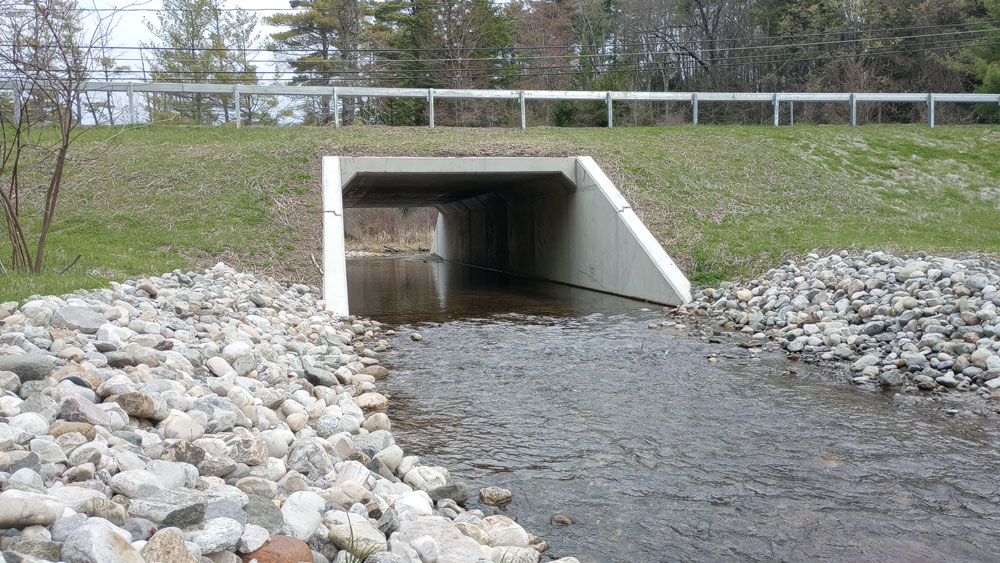
A culvert is a closed conduit or structure that conveys water beneath a roadway, railroad, embankment, or similar obstruction, allowing surface water or stream flow to pass from one side to the other without overtopping the crossing. In stormwater management and transportation infrastructure, culverts are essential components for maintaining natural drainage patterns while supporting safe and stable passage of vehicles or rail traffic above.
Culverts function as both hydraulic conveyance structures and, in many cases, stream crossings. They are designed to carry stormwater runoff, intermittent drainage, or perennial stream flow, and must accommodate a range of conditions from low baseflow to high-intensity storm events. Depending on their design and the site conditions, culverts may operate under inlet control, outlet control, or a combination of both, which governs their hydraulic capacity and performance.
Culverts are constructed in a variety of shapes and materials. Common forms include circular pipes, elliptical pipes, and rectangular or box-shaped structures. Materials typically include corrugated metal, reinforced concrete, high-density polyethylene (HDPE), and other durable products selected based on structural requirements, hydraulic performance, and environmental conditions. End treatments such as headwalls, wingwalls, and flared end sections are often used to improve hydraulic efficiency and protect against erosion.
From a stormwater and environmental perspective, culverts must be carefully designed to address not only flow capacity but also erosion control, sediment transport, and aquatic organism passage. Poorly designed or undersized culverts can create upstream flooding, downstream scour, and barriers to fish and wildlife movement. In particular, perched outlets or excessive flow velocities can prevent aquatic species from moving through the structure.
Culverts also play a role in watershed connectivity, linking upstream and downstream hydrologic systems. Their design often considers factors such as stream alignment, slope, substrate continuity, and natural channel characteristics to minimize ecological disruption.
Routine inspection and maintenance are critical to culvert performance. Debris blockage, sediment accumulation, structural deterioration, and corrosion can all reduce capacity and lead to failure. As a result, culverts are key assets in municipal stormwater systems and are often included in asset management and inspection programs.
A culvert is a fundamental element of stormwater infrastructure, serving to safely convey water beneath crossings while balancing hydraulic efficiency, structural integrity, and environmental considerations.