

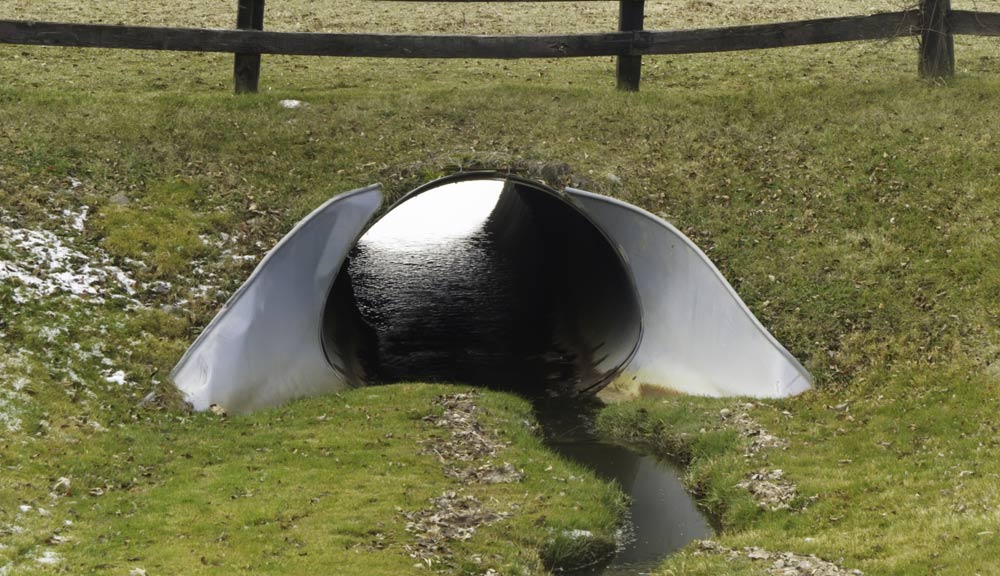
Wingwalls are structural extensions attached to the sides of a culvert, pipe, bridge abutment, or headwall that are designed to retain surrounding soil, guide water flow into or out of the structure, and improve both hydraulic performance and structural stability. They are typically angled outward from the main structure and constructed of materials such as concrete, masonry, metal, or stone.
Wingwalls serve several important functions in stormwater management and conveyance systems. Structurally, they stabilize the embankment by holding back soil and preventing erosion or sloughing around the inlet or outlet. Hydraulically, they help direct and align flow into the conduit, reducing turbulence and minimizing energy losses at the entrance. At outlets, they assist in spreading and directing discharge flow, often working in conjunction with energy dissipation measures to reduce downstream scour.
The orientation and length of wingwalls are important design considerations. They are commonly flared at an angle that facilitates smooth flow transition between open-channel conditions and the confined flow within a culvert or pipe. Proper alignment with the approaching or exiting flow path helps reduce disturbances and improves the overall efficiency of the system.
Wingwalls are frequently used alongside headwalls to form a complete inlet or outlet structure. Together, these components enhance durability, protect infrastructure, and reduce maintenance needs by preventing erosion and maintaining the integrity of the conveyance system.
In stormwater applications, wingwalls are commonly found in roadside drainage systems, culvert crossings, and storm sewer outfalls, where they play a critical role in both hydraulic function and erosion control.