

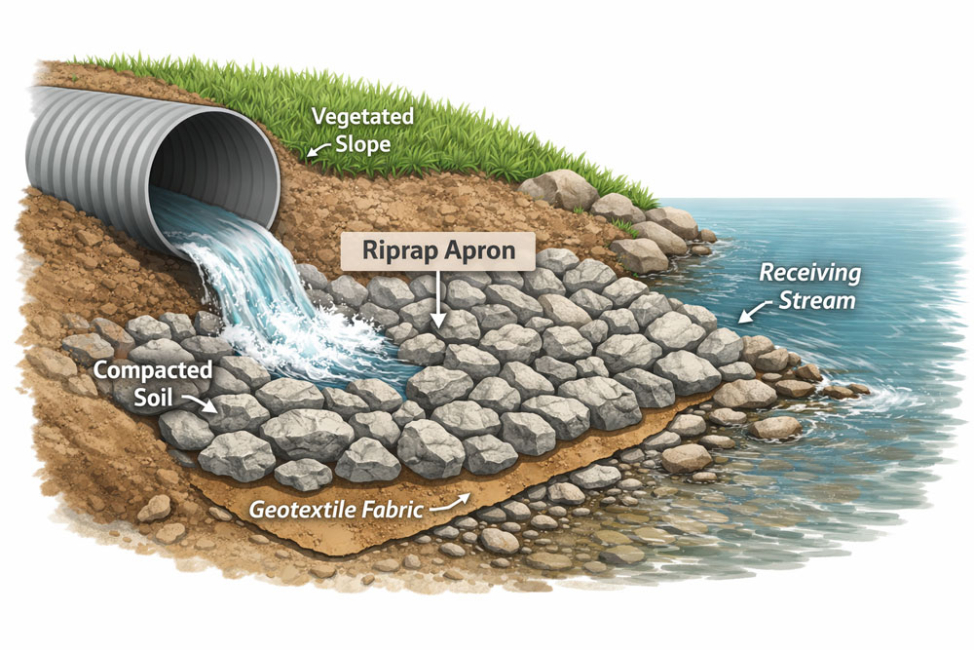
Outfall is the point where a stormwater conveyance system discharges collected runoff into a receiving system, such as a stream, river, lake, wetland, or other water body. In stormwater management, the outfall represents the downstream terminus of infrastructure such as pipes, culverts, ditches, or a municipal separate storm sewer system.
An outfall typically includes structural and stabilization features designed to manage the transition from confined flow within the conveyance system to open-channel or natural conditions. These features may include headwalls, wingwalls, end sections, riprap aprons, or energy dissipators, all of which help control flow direction, reduce velocity, and prevent erosion or scour at the discharge location.
From a hydraulic perspective, outfalls are critical points in a drainage system because they influence upstream flow conditions, system capacity, and potential backwater effects. Proper design ensures that water can exit the system efficiently without causing flooding or structural damage.
From a water quality standpoint, outfalls are also key monitoring and regulatory points. Because stormwater is often discharged without treatment, pollutants such as sediment, nutrients, metals, and hydrocarbons may be conveyed directly into receiving waters. As a result, outfalls are commonly inspected as part of programs like Illicit Discharge Detection and Elimination (IDDE) to identify unauthorized discharges and assess water quality impacts.
In stormwater management, the design and maintenance of outfalls are essential for protecting downstream environments, preventing erosion, and ensuring the effective operation of the overall drainage system.