

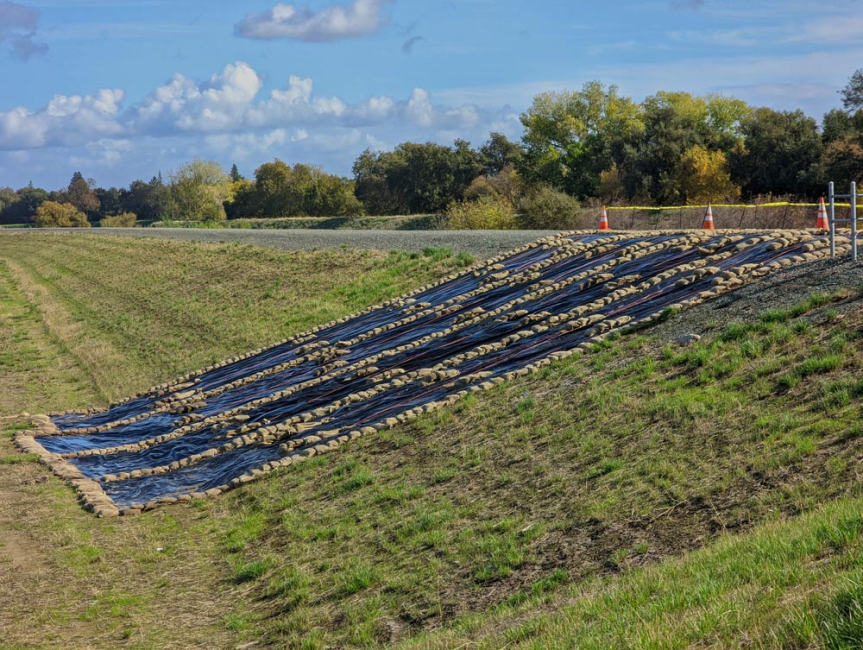
Erosion control is the practice of preventing or minimizing the detachment and transport of soil particles by stabilizing the ground surface and reducing the erosive forces of rainfall impact and runoff. In stormwater management, erosion control focuses on keeping soil in place at its source, thereby reducing sediment generation and protecting downstream water quality and infrastructure.
Erosion control measures work by addressing the fundamental causes of erosion, including raindrop impact, surface runoff velocity, and lack of soil cohesion. Techniques are designed to absorb or dissipate rainfall energy, increase infiltration, shorten slope length, and provide physical protection or reinforcement to the soil surface. These measures are most effective when implemented early, before significant soil disturbance occurs, and maintained throughout the duration of a project.
Common erosion control practices include establishing vegetative cover through seeding, sodding, or planting, applying mulch to shield the soil surface, and installing erosion control blankets or mats to stabilize slopes and channels. Soil stabilization techniques, such as compaction or the use of soil binders, may also be employed where vegetation is not immediately feasible. In addition, grading practices that reduce slope steepness and length help limit the potential for runoff to gain erosive energy.
Erosion control is distinct from, but closely related to, sediment control. While erosion control aims to prevent soil from becoming detached in the first place, sediment control focuses on capturing and removing soil particles after they have been mobilized. Effective stormwater management relies on a combination of both approaches, with erosion control serving as the first and most critical line of defense.
By reducing soil loss at the source, erosion control helps maintain site stability, preserve soil productivity, minimize maintenance needs, and prevent the transport of pollutants attached to sediment. It is a central component of construction management, land development, and watershed protection strategies.