

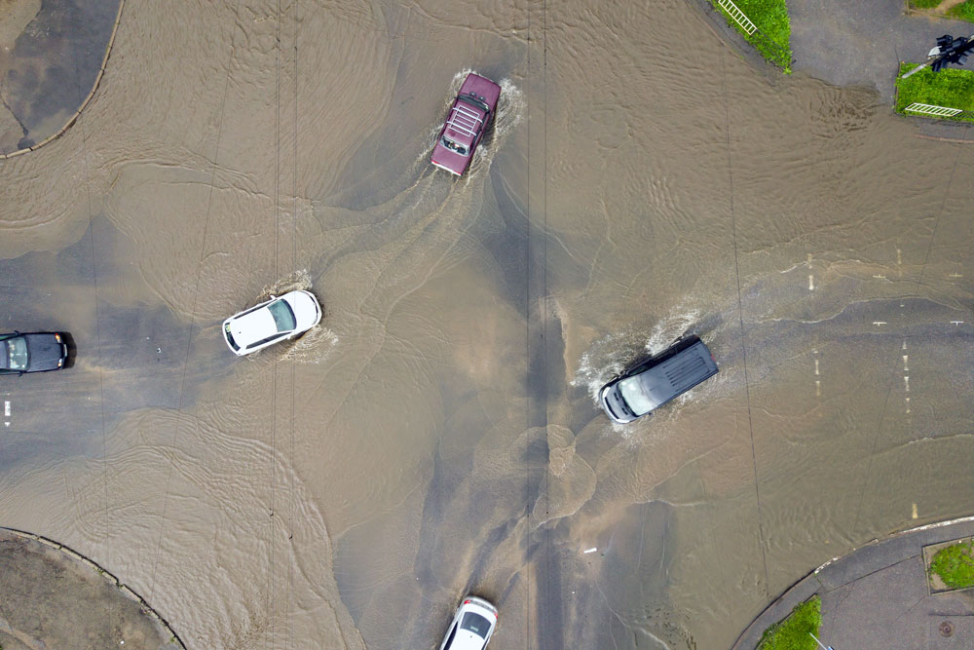
Runoff is the portion of precipitation, including rainfall and snowmelt, that does not infiltrate into the soil, evaporate, or become stored on the land surface, but instead flows over the ground and is conveyed to drainage systems, streams, rivers, or other receiving waters. It is a fundamental component of the hydrologic cycle and a primary focus of stormwater management.
Runoff is generated when the rate of precipitation exceeds the soil’s infiltration capacity, when the ground is already saturated, or when surfaces are impervious, such as pavement and rooftops. It can also occur over frozen ground where infiltration is limited. Once generated, runoff moves downslope as overland flow, eventually concentrating into channels, ditches, storm sewers, and natural watercourses.
In undeveloped conditions, a significant portion of precipitation infiltrates into the ground or is returned to the atmosphere through evapotranspiration, resulting in relatively low runoff volumes and slower flow rates. However, land development increases impervious cover and alters natural drainage patterns, leading to greater runoff volumes, higher peak flows, and more rapid conveyance. These changes can contribute to flooding, stream channel erosion, and degradation of water quality.
Runoff is also a major transport mechanism for pollutants. As it flows over surfaces, it can pick up sediment, nutrients, metals, hydrocarbons, trash, bacteria, and dissolved substances such as chlorides. These pollutants are then carried into stormwater systems and discharged into receiving waters, making runoff a key contributor to nonpoint source pollution.
In stormwater management, runoff is analyzed and controlled through a combination of hydrologic and hydraulic design practices. Techniques such as detention, infiltration, and green infrastructure are used to reduce runoff volume, slow flow rates, and improve water quality.
Runoff represents the movement of excess water across the land surface, linking precipitation to downstream water bodies and serving as a central concept in the design and management of stormwater systems.