

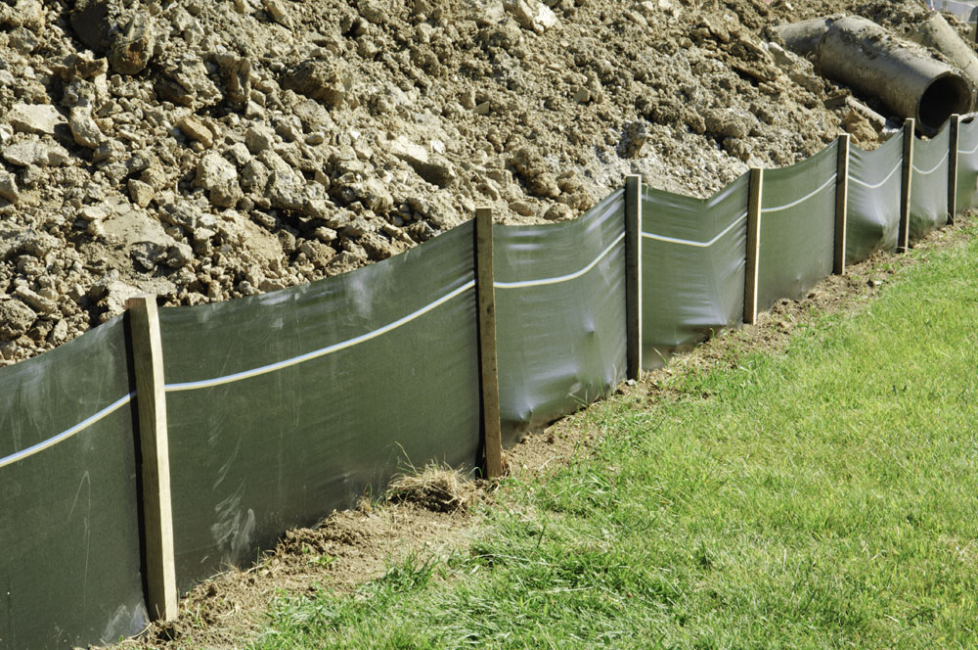
Sediment control is the practice of intercepting, capturing, retaining, and removing soil particles that have already been detached and transported by runoff, with the goal of preventing sediment from leaving a disturbed site and entering stormwater systems or receiving waters. In stormwater management, sediment control is implemented as a secondary line of defense, complementing erosion control measures that aim to prevent soil detachment at its source.
Sediment control measures function by reducing flow velocity, providing storage or detention time, and creating conditions that allow suspended particles to settle out of runoff through gravitational processes such as sedimentation. These practices are designed to target a range of particle sizes, although finer particles, such as silts and clays, are more difficult to capture and may require extended detention or filtration.
Common sediment control practices include silt fences, sediment basins, sediment traps, check dams, inlet protection, and filter strips. These measures are strategically placed downgradient of disturbed areas, along flow paths, or at discharge points to intercept sediment-laden runoff before it exits the site. Structural controls may be supplemented with filtration systems or vegetative buffers to enhance sediment removal efficiency.
Proper design, installation, and maintenance are critical to the effectiveness of sediment control measures. Accumulated sediment must be periodically removed to maintain storage capacity and functionality, and controls must be inspected regularly, particularly after storm events, to ensure they remain intact and effective.
While sediment control is essential for protecting water quality, it is inherently less effective than preventing erosion in the first place. Once soil particles are mobilized, especially fine particles, they are more difficult to remove from runoff. Therefore, sediment control is most effective when used in conjunction with robust erosion control practices as part of a comprehensive stormwater management strategy, such as those outlined in an erosion and sediment control plan or a Stormwater Pollution Prevention Plan.