

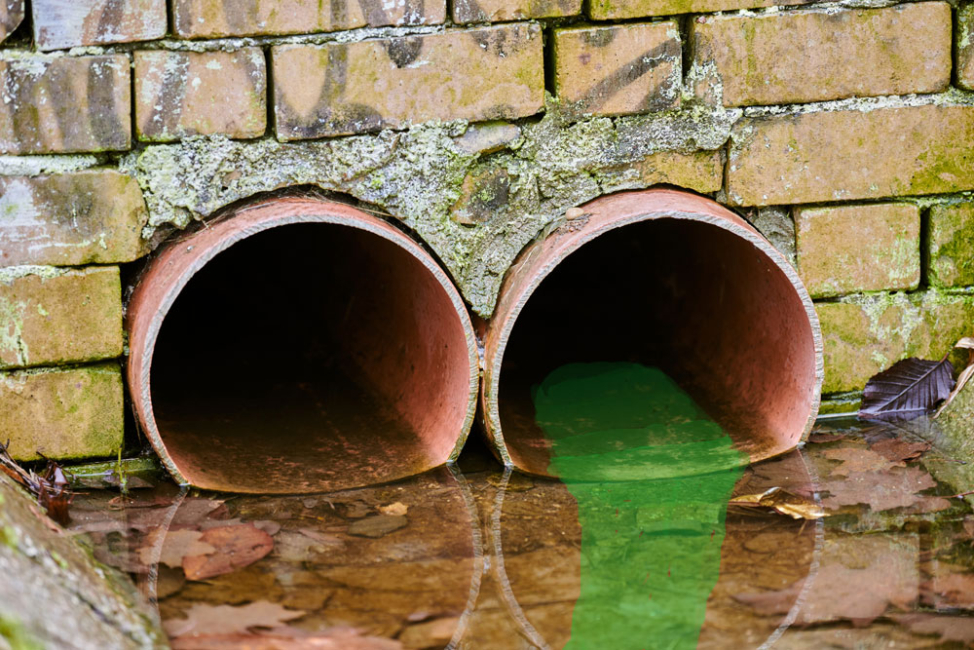
When stormwater professionals encounter an unexplained discharge, a suspicious pipe, or a drainage system that does not behave as expected, one of the most effective investigative tools available is dye testing. Used by municipalities, engineers, environmental consultants, utility operators, and regulatory agencies, dye testing helps determine where water is coming from, where it is flowing, and whether stormwater infrastructure is connected as intended.
Despite its simplicity, dye testing can answer questions that would otherwise require extensive excavation or costly exploratory work. By introducing a brightly colored, environmentally safe tracer dye into a drainage system and observing where it appears, investigators can quickly identify hidden connections, trace flow paths, and locate sources of pollution entering streams, lakes, wetlands, or municipal storm sewer systems.
Whether you are operating under an MS4 permit, responding to a resident complaint, investigating an illicit discharge, or verifying newly installed infrastructure, understanding how dye testing works can save time, reduce costs, and improve the accuracy of your investigation.
Dye testing is a non-destructive investigative method that uses a highly visible tracer dye to follow the movement of water through pipes, drainage systems, soils, culverts, septic systems, or natural waterways. During a dye test, investigators introduce a measured quantity of fluorescent or brightly colored dye into a suspected source of water. They then monitor downstream locations, storm drains, manholes, outfalls, streams, or receiving waters to determine where the dyed water emerges.
Because the dye travels with the water, it provides direct evidence of hydraulic connectivity between two locations. Unlike assumptions based on maps or historical records, dye testing demonstrates how water actually moves through a drainage system under existing conditions.
Many municipal drainage systems are decades old. Original construction drawings may be incomplete, inaccurate, or entirely unavailable. Over the years, infrastructure may have been modified by utility work, private development, road reconstruction, or emergency repairs. As a result, municipalities frequently encounter situations where the actual drainage network differs significantly from available records.
Dye testing helps answer important questions, including:
Because the test provides visual confirmation, it often eliminates much of the uncertainty involved in diagnosing drainage problems.
Stormwater professionals use dye testing for a wide variety of investigations.
One of the most common applications is identifying illicit discharges. If contaminated water is flowing from a storm sewer outfall during dry weather, investigators may introduce dye into nearby buildings, floor drains, sanitary plumbing, parking lot drains, or suspected discharge points to determine whether they are connected to the municipal storm sewer. This information is especially valuable for municipalities operating under an MS4 permit, where identifying and eliminating illicit discharges is a regulatory requirement.
Older drainage systems often contain undocumented pipe connections. By introducing dye into one catch basin and observing downstream structures, investigators can verify drainage routes and update municipal storm sewer maps.
Some properties contain improper connections between sanitary plumbing and storm drains.
Examples include:
Dye testing can confirm whether these discharges enter the storm drainage system.
Environmental agencies frequently use dye testing to determine whether failing septic systems are releasing wastewater into nearby streams, drainage ditches, wetlands, or lakes. A dye introduced into household plumbing may later appear in nearby surface waters if the septic system is malfunctioning.
Contractors and engineers sometimes perform dye tests before accepting newly installed stormwater infrastructure. The test verifies that new drainage systems function as designed and discharge to the correct locations.
Several tracer dyes are commonly used for environmental investigations. Fluorescein is one of the most widely used because it produces a bright green color that is highly visible even at low concentrations. It is commonly used for tracing stormwater systems, groundwater movement, and surface water flow. Rhodamine WT produces a red or pink fluorescent color and is often selected for larger water bodies because it remains detectable over greater distances.
Other specialized dyes may be selected depending on the investigation, background water color, detection equipment, or environmental conditions. Most dyes used in professional stormwater investigations are specifically formulated to be biodegradable, non-toxic when used appropriately, and safe for aquatic environments.
Although every investigation is different, most dye tests follow a similar process. Investigators first identify the suspected source location and determine the likely downstream monitoring points. Before introducing any dye, they inspect the surrounding drainage system to ensure observers are positioned at likely discharge locations. The dye is then mixed with water and introduced into the drainage system. Additional water may be used to simulate runoff and move the dye through the system. Finally, observers monitor catch basins, manholes, culvert outlets, storm sewer outfalls, streams, or receiving waters for the appearance of the colored dye.
Investigators document:
The collected information becomes part of the investigation record and may support future enforcement actions or infrastructure improvements.
Dye testing offers numerous advantages over more invasive investigation methods. It is relatively inexpensive, produces immediate visual results, requires minimal equipment, and causes little disruption to public infrastructure.
Unlike excavation, dye testing leaves roads, sidewalks, and drainage systems undisturbed. The method is also highly flexible, allowing investigators to examine both simple residential drainage issues and complex municipal storm sewer networks. When combined with GPS mapping, GIS databases, CCTV inspections, smoke testing, and field surveys, dye testing becomes an important component of comprehensive drainage investigations.
Although dye testing is highly effective, it is not appropriate for every situation. Very low flows may delay dye movement for hours or even days. Heavy rainfall can dilute the dye, making detection more difficult. Large pipe systems may require greater dye volumes than smaller drainage networks. Background water color, sediment, algae, or turbidity can also reduce visibility.
For particularly complex investigations, municipalities may supplement visual observations with fluorometers or other instruments capable of detecting very low dye concentrations.
Professional tracer dyes are generally considered environmentally safe when used according to manufacturer recommendations. Nevertheless, investigators should carefully calculate the appropriate quantity of dye for each test and avoid introducing unnecessary amounts into natural water bodies. Some investigations may require coordination with environmental agencies, wastewater utilities, or property owners before testing begins.
Public notification is also important. Residents who unexpectedly observe bright green or red water flowing through a stream may assume a chemical spill has occurred. Municipalities often issue advance notices explaining the purpose of the dye test and reassuring the public that the dye is specifically designed for environmental investigations.
Investigators should also follow normal field safety procedures, including wearing appropriate personal protective equipment, working safely around traffic and confined spaces, and avoiding direct contact with contaminated water during illicit discharge investigations.
Municipal Separate Storm Sewer System (MS4) permit holders frequently use dye testing as part of their Illicit Discharge Detection and Elimination (IDDE) programs. Dye testing provides valuable evidence when investigating suspicious discharges, confirming storm sewer connectivity, identifying unauthorized plumbing connections, and documenting corrective actions. When properly documented, dye test results can strengthen municipal records, demonstrate due diligence during regulatory inspections, and help prioritize infrastructure repairs.
Stormwater systems are often hidden beneath streets, parking lots, and developed landscapes, making it difficult to understand how water actually moves through a community. Dye testing removes much of that uncertainty by providing clear, visual confirmation of underground flow paths and drainage connections.
For municipalities, engineers, and environmental professionals, dye testing is one of the simplest and most effective investigative techniques available. Whether the goal is locating an illicit discharge, mapping an aging storm sewer system, investigating a failing septic system, or verifying new construction, a carefully planned dye test can reveal answers that would otherwise remain hidden beneath the surface.
As communities continue to invest in stormwater management, watershed protection, and regulatory compliance, dye testing will remain an indispensable tool for understanding and protecting the infrastructure that carries stormwater safely through our neighborhoods and into the natural environment.