

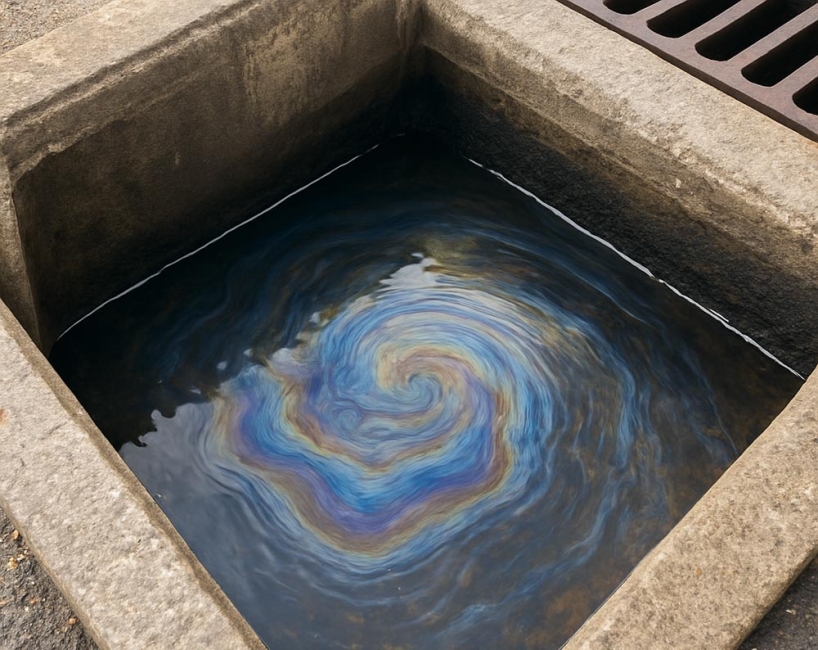
Illicit discharge is any discharge to a municipal separate storm sewer system (MS4) that is not composed entirely of stormwater, except for those specific non-stormwater discharges that are explicitly authorized by permit. In the United States, illicit discharges are regulated under programs such as the National Pollutant Discharge Elimination System because they can introduce pollutants directly into surface waters without treatment.
Illicit discharges can originate from a variety of sources, including illegal dumping, improper connections to the storm sewer system, spills, or the release of wastewater or industrial fluids. Common examples include sanitary sewage from cross-connections or failing septic systems, wash water from commercial or industrial activities, automotive fluids, paints, solvents, and other contaminants that are not associated with precipitation events.
A key characteristic of illicit discharges is that they often occur during dry weather, making them distinguishable from typical stormwater runoff. They may be continuous or intermittent and can significantly degrade water quality by introducing pollutants such as nutrients, pathogens, heavy metals, oils, and toxic substances into receiving waters.
Stormwater programs require MS4 operators to implement Illicit Discharge Detection and Elimination (IDDE) programs, which involve mapping storm sewer systems, conducting outfall inspections, performing dry weather screening, tracing pollutant sources, and eliminating illegal connections or discharges. Public education and reporting mechanisms are also important components of these programs.
It is important to note that some non-stormwater discharges, such as landscape irrigation, foundation drains, or certain uncontaminated groundwater flows, may be allowed under permit if they are not significant sources of pollution.
From a stormwater management perspective, controlling illicit discharges is critical because they bypass natural and engineered treatment processes, allowing pollutants to enter water bodies directly. Effective identification and elimination of these discharges are essential for protecting water quality and maintaining regulatory compliance.