

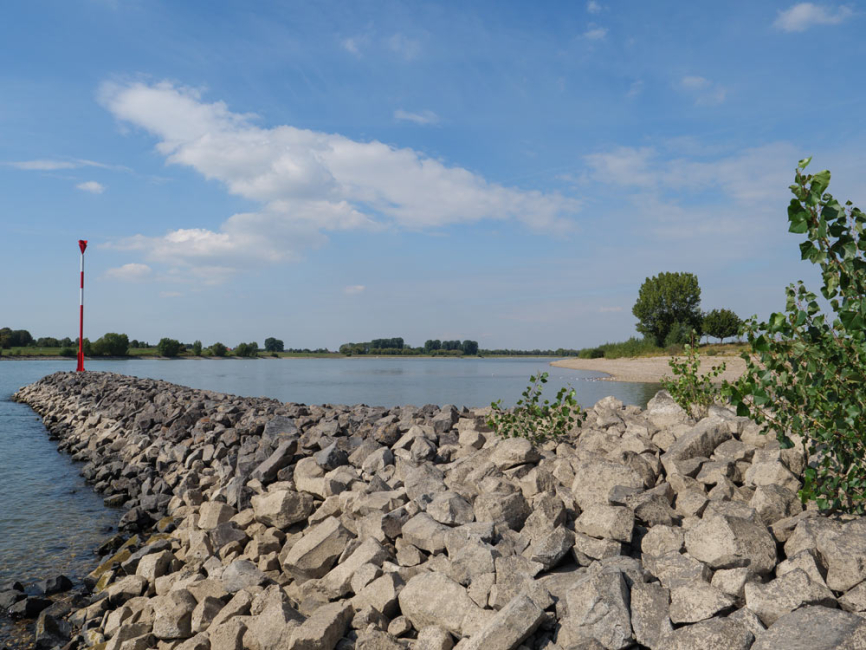
Riprap is a layer of durable, coarse aggregate material, typically consisting of large, angular stones or rock fragments, that is placed on soil surfaces to protect them from erosion caused by flowing water, wave action, or concentrated runoff in stormwater systems.
In stormwater management, riprap functions as an energy dissipation and stabilization measure. It is commonly installed along channels, streambanks, culvert inlets and outlets, outfalls, and shorelines where high-velocity flows or turbulence would otherwise erode soil, undermine structures, or mobilize sediment. By increasing surface roughness and resisting hydraulic forces, riprap reduces flow velocity at the boundary, absorbs and dissipates kinetic energy, and prevents the detachment and transport of underlying soil particles.
Riprap is typically designed based on hydraulic conditions such as flow depth, velocity, shear stress, and anticipated storm events. The size, gradation, thickness, and extent of the stone layer are selected to ensure stability under design flows, with larger stones required for higher energy environments. Proper installation often includes a filter layer or geotextile beneath the riprap to prevent soil from being washed out through voids between stones while still allowing drainage.
In addition to erosion control, riprap can contribute to limited habitat complexity in aquatic environments, although it is generally less ecologically beneficial than natural substrates. Poorly designed or improperly placed riprap can lead to issues such as displacement, scour at the edges, or downstream erosion due to altered flow patterns.