

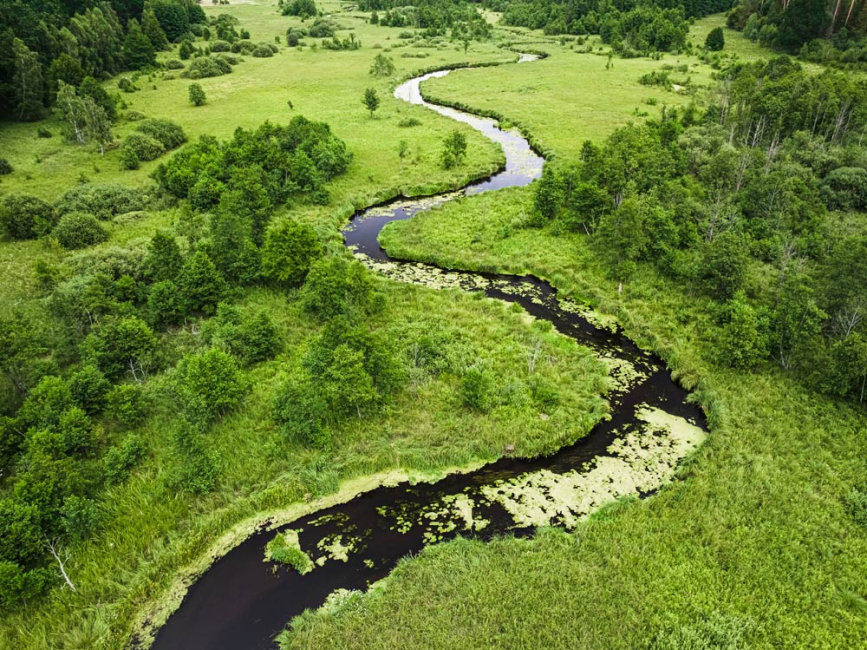
Riparian vegetation refers to the plant communities that grow along the banks and floodplains of rivers, streams, lakes, and other water bodies, in areas that are directly influenced by the presence of surface water and shallow groundwater. These vegetated zones, commonly called riparian zones or corridors, form the transitional interface between terrestrial and aquatic environments and are characterized by soils, hydrology, and ecological conditions that support water-tolerant plant species.
In stormwater management, riparian vegetation plays a critical functional role in protecting water quality and stabilizing drainage systems. The root systems of riparian plants reinforce streambanks and reduce erosion by increasing soil cohesion and resistance to shear stress. Above ground, stems and foliage slow overland flow and shallow channel velocities, which promotes sediment deposition and reduces the transport of suspended solids into receiving waters.
Riparian vegetation also contributes significantly to pollutant removal and transformation. As stormwater runoff passes through vegetated buffers, nutrients such as nitrogen and phosphorus can be taken up by plants or immobilized in soils. Microbial communities in the root zone facilitate processes such as denitrification and organic matter decomposition, which further improve water quality. In addition, vegetation can trap hydrocarbons, metals, and other pollutants associated with urban runoff.
From a hydrologic perspective, riparian vegetation enhances infiltration and groundwater recharge by improving soil structure and increasing surface roughness, which reduces runoff velocity and encourages water to percolate into the soil. It also provides shading, which moderates water temperature and helps maintain dissolved oxygen levels, both of which are important for aquatic life.
Beyond its hydraulic and water quality functions, riparian vegetation supports biodiversity by providing habitat, food sources, and migration corridors for a wide range of terrestrial and aquatic organisms. However, when riparian zones are degraded or removed due to development, channelization, or poor land management, stream systems become more susceptible to erosion, sedimentation, elevated temperatures, and pollutant loading.
Simply put, riparian vegetation is a key natural component of effective stormwater management, serving as both a physical buffer and a biologically active treatment system within the broader watershed.