

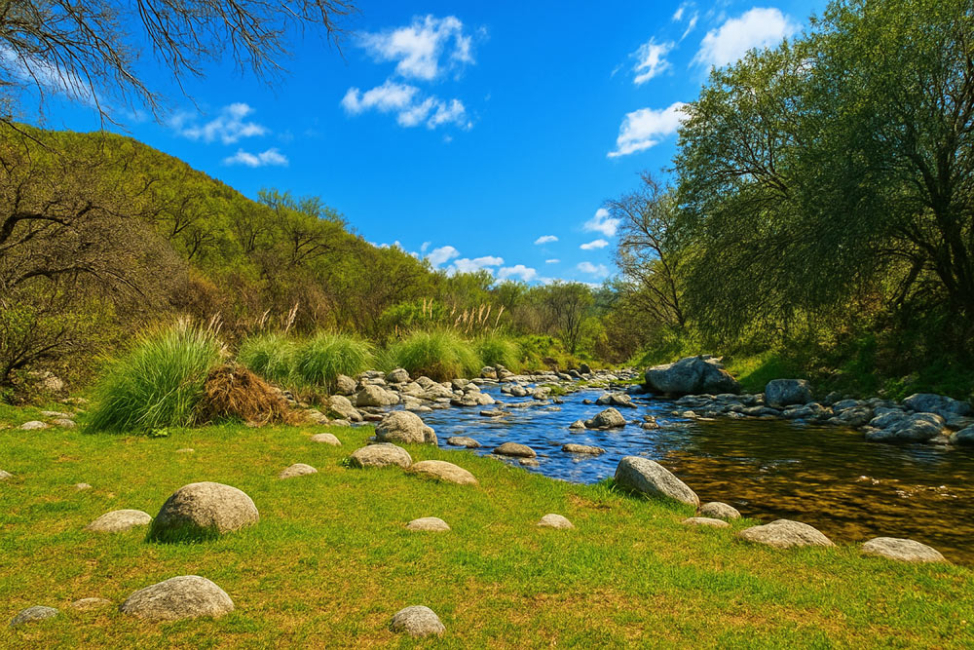
Riparian buffers are vegetated areas located adjacent to streams, rivers, lakes, wetlands, or other surface waters that are maintained or established to protect water quality, stabilize banks, and support ecological functions. In stormwater management and watershed protection, riparian buffers act as a natural transition zone between upland land uses and receiving waters.
Riparian buffers typically consist of grasses, shrubs, and trees arranged in one or more zones, each contributing different functions. The vegetation slows and disperses incoming overland flow, allowing water to infiltrate into the soil and reducing the volume and velocity of runoff entering the water body. This process helps trap and filter out sediment, nutrients, and other pollutants before they reach the stream or shoreline.
From a water quality perspective, riparian buffers are highly effective at removing sediment through filtration and promoting processes such as nutrient uptake and microbial transformation. By reducing nutrient inputs, they help mitigate problems like eutrophication. They also provide shading, which helps regulate water temperature, an important factor for aquatic life.
Structurally, riparian buffers stabilize streambanks by reinforcing soils with plant root systems, reducing the risk of erosion and channel degradation. They also help dissipate flow energy during high-water events, contributing to flood resilience.
Ecologically, riparian buffers provide critical habitat corridors for wildlife, support biodiversity, and contribute organic matter to aquatic systems, which is essential for food webs.
In stormwater management, preserving or restoring riparian buffers is a key best management practice. They serve as a cost-effective, natural solution for protecting receiving waters while enhancing both environmental quality and landscape resilience.