

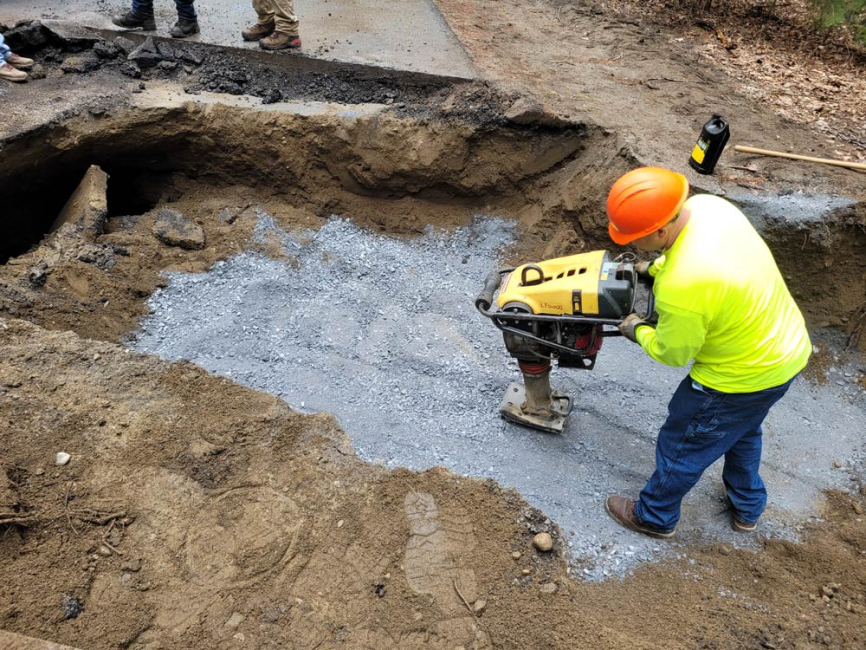
Backfill is material that is placed and compacted in an excavation after the installation of a structure, pipe, or other underground infrastructure, in order to restore the ground surface, provide structural support, and ensure long-term stability.
In stormwater management, backfill most commonly refers to the soil or aggregate placed around and above buried stormwater conveyance systems such as culverts, storm drains, underdrains, and manholes. The selection and placement of backfill are critical to the performance of these systems. Suitable backfill materials may include native soils, engineered fill, or granular materials such as sand and gravel, depending on design requirements, load conditions, and drainage characteristics.
Proper backfilling involves placing material in controlled lifts and compacting it to specified densities. This process minimizes settlement, prevents voids, and ensures that loads from overlying soils, roadways, or structures are adequately transferred without damaging the installed infrastructure. Inadequate compaction or the use of unsuitable materials can lead to differential settlement, pipe deformation, surface depressions, or even structural failure.
Backfill can also play a role in drainage and filtration. For example, in certain stormwater practices such as infiltration systems or underdrains, specific granular backfill materials are used to promote water movement while preventing the migration of fine particles. In contrast, low-permeability backfill may be used in some situations to limit water infiltration and protect structures.
Overall, backfill is a fundamental component of stormwater infrastructure construction, directly influencing structural integrity, hydraulic performance, and the long-term durability of the system.