

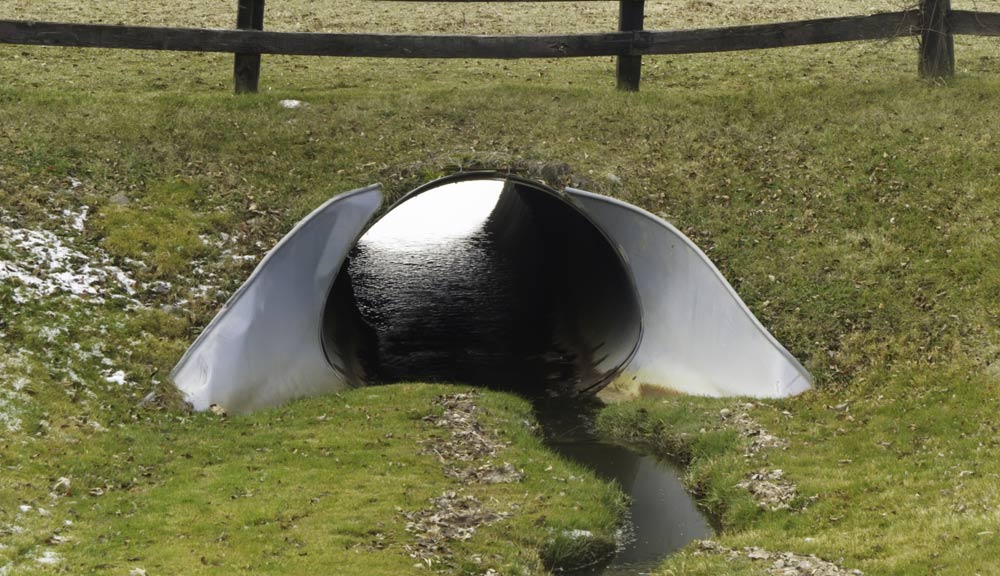
End section is a structural component installed at the outlet of a pipe, culvert, or closed-conduit stormwater conveyance system, designed to stabilize the discharge point, control erosion, and improve hydraulic performance as water transitions from confined flow to open-channel or overland flow conditions.
An end section typically consists of a flared, beveled, or otherwise shaped extension attached to the downstream end of a culvert or storm pipe. Common forms include flared end sections, headwalls, wingwalls, and endwalls, each of which serves to provide a defined and protected outlet geometry. These structures are often constructed of metal, concrete, or plastic, depending on the pipe material and design requirements.
From a hydraulic standpoint, an end section reduces turbulence and energy losses at the outlet by providing a smoother transition for flow leaving the pipe. Properly designed end sections can also improve inlet and outlet efficiency, reduce backwater effects, and help maintain the designed discharge capacity of the conveyance system.
From an erosion and sediment control perspective, end sections play a critical role in protecting downstream channels and embankments. By directing flow and often working in conjunction with riprap aprons, energy dissipators, or level spreaders, they help prevent scour, channel incision, and sediment mobilization at the outlet.
End sections may also incorporate additional functional elements, such as trash racks or grates to prevent debris entry, and animal guards to discourage wildlife from entering the pipe system. In roadside drainage applications, they can improve safety by reducing abrupt edges at culvert outlets.
In stormwater management, the end section represents the final point of conveyance before runoff is discharged into a receiving system, such as a ditch, swale, stream, or detention practice, making its design essential for both hydraulic performance and environmental protection.