

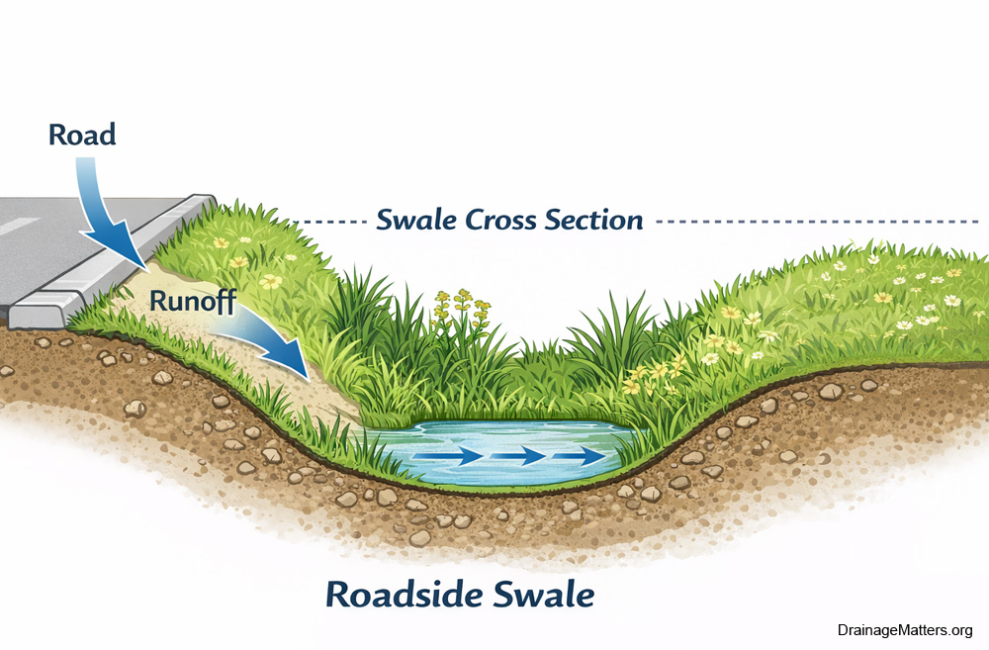
A swale is a shallow, elongated, typically vegetated channel designed to convey, store, and often treat stormwater runoff as it flows across the land surface. Unlike conventional drainage ditches or pipes, swales are generally designed to slow down water, promote infiltration, and reduce pollutant transport, making them an important component of sustainable stormwater management.
In hydrologic terms, a swale functions as an open-channel conveyance system with relatively low flow velocities. Its broad, gently sloping shape allows runoff to spread out rather than concentrate, which reduces erosive forces and enhances contact between water and the soil surface. This promotes infiltration and sediment deposition, helping to remove suspended solids and associated pollutants.
Swales are commonly lined with vegetation, such as grasses or other dense plant cover, which plays a critical role in their performance. Vegetation increases surface roughness, slowing the flow of water, stabilizing the soil, and filtering pollutants. In some designs, swales may also include engineered soil media, underdrains, or check dams to further enhance infiltration and water quality treatment.
There are several variations of swales used in stormwater systems. A grassed swale is the most basic type, primarily used for conveyance with some water quality benefits. A bioswale, also known as a vegetated swale, is more engineered and designed specifically to maximize infiltration and pollutant removal. Some swales are constructed with amended soils and subsurface drainage systems to function similarly to linear bioretention practices.
From a design perspective, swales are often used along roadways, parking lots, and developed areas as an alternative to curb-and-gutter systems. They can reduce runoff volumes, attenuate peak flows, and improve water quality while also providing aesthetic and ecological benefits.
Simply put, a swale is a shallow, vegetated drainage feature that conveys stormwater while reducing flow velocity, promoting infiltration, and improving water quality, making it a key practice in modern, low-impact stormwater design.