

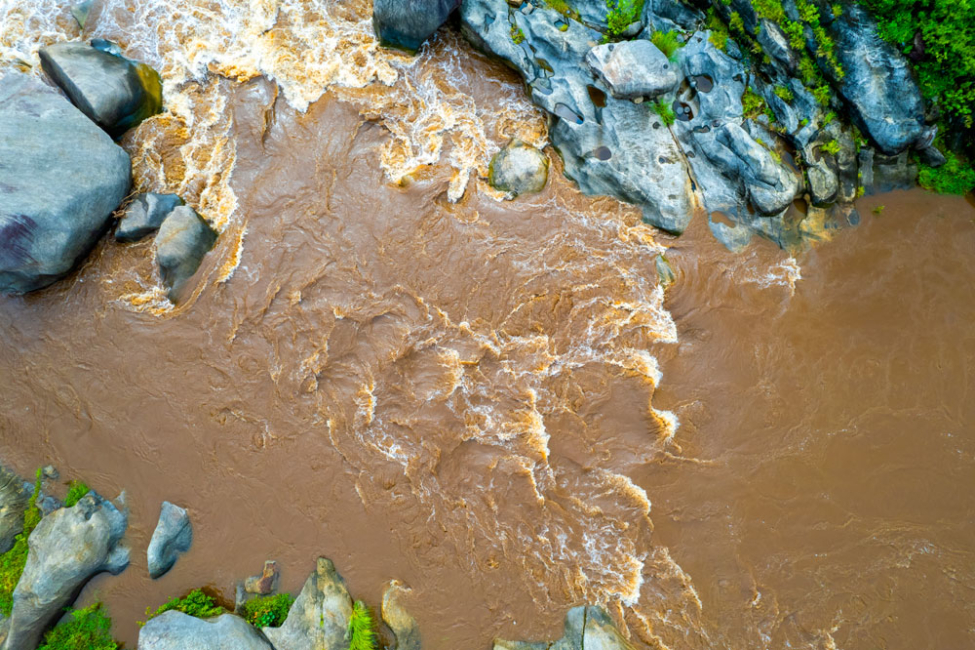
Turbidity is a measure of the cloudiness or optical clarity of water caused by the presence of suspended and colloidal particles that scatter and absorb light, reducing the ability of light to pass through the water column. In stormwater management and water quality analysis, turbidity is used as an indicator of the concentration of suspended materials such as silt, clay, organic matter, microorganisms, and other fine particulates.
Turbidity is not a direct measurement of sediment concentration, but it is closely correlated with it, particularly in systems where fine particles dominate. It is commonly measured in Nephelometric Turbidity Units (NTU) using instruments called nephelometers, which quantify the intensity of light scattered by particles in the water.
In the context of stormwater runoff, turbidity typically increases during and after precipitation events, when erosion processes mobilize soil particles and transport them into drainage systems and receiving waters. Sources of turbidity include construction site runoff, streambank erosion, roadway runoff, and disturbed land surfaces.
Elevated turbidity has several important environmental and regulatory implications. High turbidity levels can reduce light penetration, impairing photosynthesis in aquatic plants and algae. Suspended particles can also clog fish gills, smother benthic habitats, and interfere with feeding and reproduction. Additionally, many pollutants, including nutrients, heavy metals, and pathogens, can adsorb to fine particles, making turbidity an indirect indicator of broader water quality concerns.
From a stormwater management perspective, controlling turbidity involves minimizing erosion at the source and promoting sedimentation through practices such as sediment basins, filtration systems, and vegetative stabilization. Because fine particles responsible for turbidity settle slowly, managing turbidity often requires extended detention times or additional treatment mechanisms beyond simple settling.
Overall, turbidity is a critical parameter for assessing the effectiveness of erosion and sediment control measures and for evaluating the impact of land disturbance on receiving water bodies.