

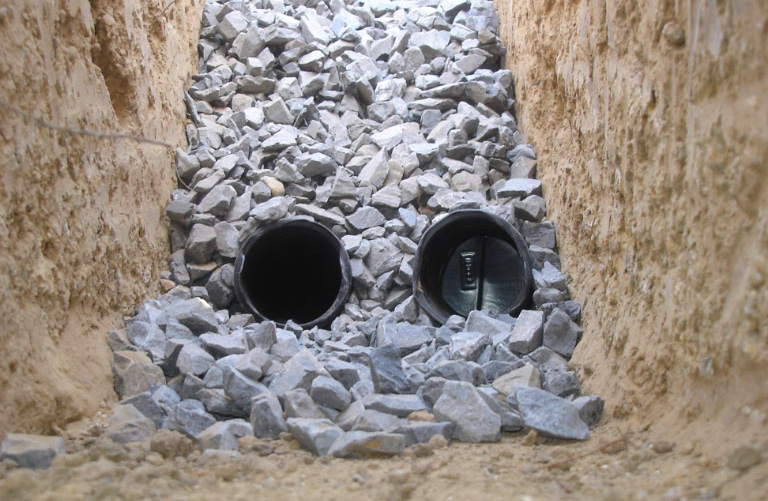
An underdrain is a subsurface drainage system designed to collect and convey water that has infiltrated into the ground, typically consisting of a perforated or slotted pipe installed below the surface within a layer of permeable material such as gravel or crushed stone. In stormwater management, underdrains are commonly incorporated into practices such as bioretention areas, infiltration basins, permeable pavements, and other green infrastructure systems to regulate soil moisture, improve drainage, and prevent prolonged saturation that could impair system performance or damage vegetation and structural components.
Underdrains function by intercepting excess water that percolates through engineered soil media, allowing that water to enter the perforated pipe and be conveyed to an outlet, such as a storm sewer, ditch, or other discharge point. This process helps maintain appropriate hydraulic conditions within the practice, particularly in soils with low permeability or in areas with high groundwater tables where natural infiltration is limited. In some designs, underdrains are elevated above the bottom of the system to promote partial infiltration before drainage occurs, thereby balancing water quality treatment with volume reduction.
In addition to hydraulic control, underdrains can play a role in water quality management. As stormwater passes through the overlying soil and filter media before reaching the underdrain, pollutants such as suspended solids, nutrients, metals, and hydrocarbons can be removed through processes including filtration, adsorption, and biological uptake. The underdrain then conveys the treated water away from the system.
Underdrains are a critical design component in many stormwater best management practices, especially where site constraints prevent full infiltration, allowing these systems to function effectively while still providing water quality and limited quantity control benefits.