

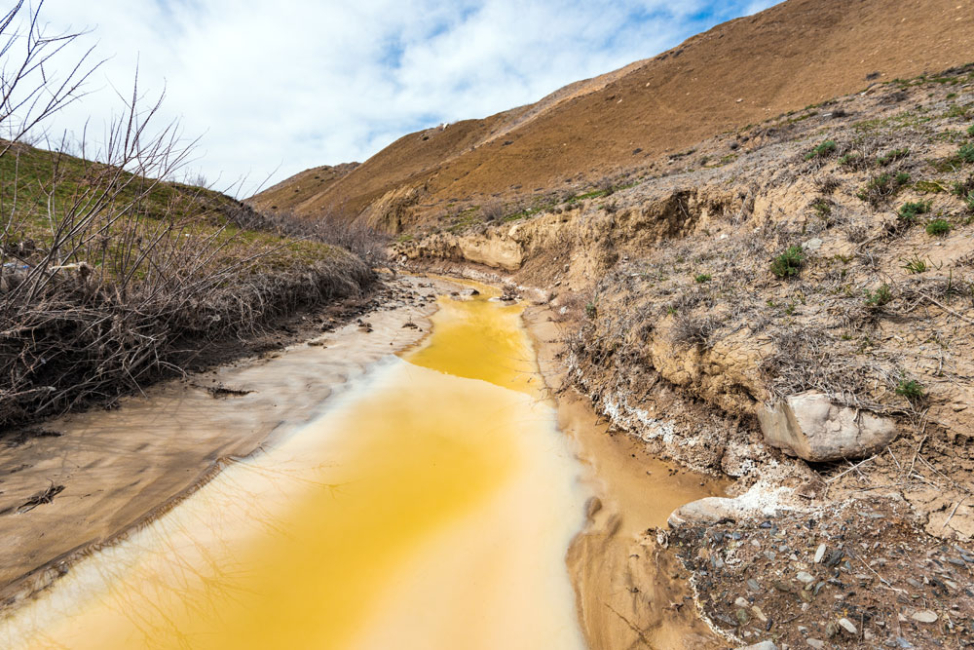
Suspended solids are solid particles that are not dissolved in water but are instead dispersed and carried within the water column, remaining in suspension due to turbulence, flow velocity, or their small size and low settling velocity. In stormwater systems, suspended solids consist of a wide range of particulate matter, including soil particles such as silt and clay, organic debris, algae, microorganisms, and fine fragments of man-made materials.
These particles originate from sources such as soil erosion, roadway wear, construction activities, atmospheric deposition, and the breakdown of organic material. During rainfall events, runoff mobilizes and transports these materials into drainage systems, streams, and other receiving waters. Because suspended solids are physically carried by flowing water rather than dissolved, they can settle out when flow velocities decrease, such as in detention basins, sediment forebays, or natural water bodies.
Suspended solids are significant in stormwater management because they are a primary carrier of other pollutants. Nutrients, heavy metals, hydrocarbons, and pathogens often attach to or are adsorbed onto the surface of these particles, allowing them to be transported together. As a result, controlling suspended solids is a key objective in many stormwater best management practices, since their removal can also reduce associated pollutant loads.
The behavior of suspended solids in water is influenced by particle size, shape, density, and the hydraulic conditions of the system. Larger and denser particles tend to settle more quickly, while finer particles such as clays may remain suspended for extended periods and require filtration or chemical processes like flocculation to be effectively removed. Overall, suspended solids play a central role in water quality, sediment transport, and the design of stormwater treatment systems.