

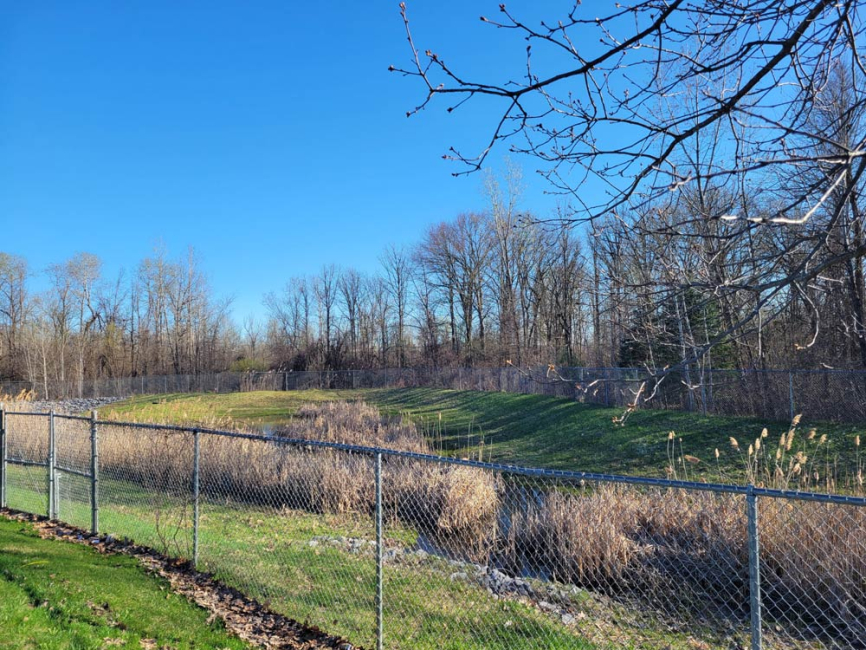
A detention basin is a stormwater management facility designed to temporarily store runoff and release it at a controlled rate to reduce downstream flooding, channel erosion, and peak flow impacts. Unlike permanent ponds, a detention basin typically remains dry between storm events and only holds water for a limited period following rainfall or snowmelt.
In function, a detention basin captures runoff from a contributing drainage area and attenuates the peak discharge by slowing and regulating the outflow through a control structure, such as an orifice, weir, or outlet pipe. The stored water is gradually released over a specified period, often hours to a few days, depending on design criteria and regulatory requirements. This process helps mimic pre-development hydrologic conditions by reducing the intensity of flow entering downstream systems.
Detention basins are primarily used for quantity control rather than water quality treatment, although some incidental settling of suspended solids may occur during the storage period. Their design typically includes an inlet to convey stormwater into the basin, a storage area sized based on runoff calculations, an outlet control structure to regulate discharge, and an emergency spillway to safely pass flows that exceed the design capacity.
From a stormwater management perspective, detention basins play a critical role in mitigating the impacts of increased impervious surfaces associated with development. By reducing peak flows, they help prevent downstream flooding, minimize erosion of stream banks and channels, and protect existing infrastructure.
Proper design and maintenance are essential to ensure long-term performance. This includes managing sediment accumulation, maintaining vegetation, inspecting outlet structures, and ensuring that the basin drains as intended after storm events. Overall, detention basins are a fundamental and widely used best management practice for controlling stormwater runoff in both urban and suburban environments.
Note: Detention ponds are ofen referred to as "dry ponds" because they are intended to be empty unless during or after a rain or snowmelt event.