

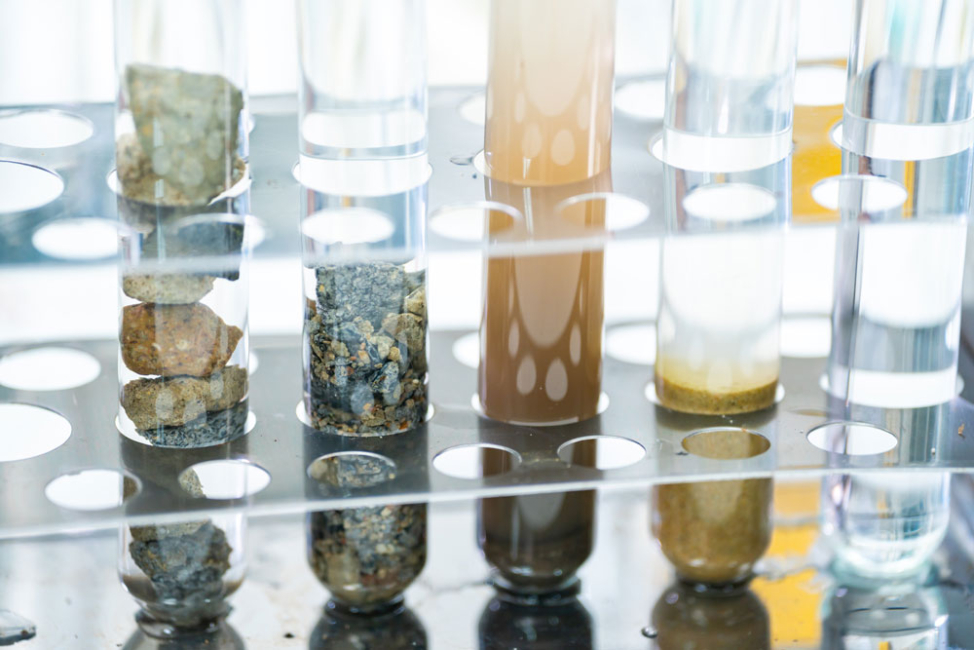
Suspended solids, often referred to as total suspended solids (TSS) in stormwater management, are solid particles that are present in water but are not dissolved, and instead remain dispersed or “suspended” within the water column due to turbulence, flow velocity, or very small particle size. These materials are typically retained on a filter during laboratory analysis, distinguishing them from dissolved constituents.
In stormwater systems, suspended solids originate from a wide range of sources, including eroded soil particles (such as silt and clay), roadway dust and debris, organic matter like leaves and plant fragments, tire wear particles, construction site sediment, and other fine particulates generated by human activity or natural processes. Because stormwater runoff mobilizes and transports these materials, especially during rainfall events, suspended solids are one of the most common and significant pollutants found in urban and rural runoff.
From a physical standpoint, suspended solids vary widely in size, composition, and settling behavior. Larger and denser particles may settle relatively quickly under low-flow conditions, while finer particles such as clays or organic colloids can remain suspended for extended periods and may require chemical or biological processes to be removed. The concentration of suspended solids in water is typically expressed in milligrams per liter (mg/L) and is a key indicator of water quality.
Suspended solids are critically important in stormwater management because they serve not only as pollutants themselves, but also as carriers for other contaminants. Nutrients such as phosphorus, heavy metals, hydrocarbons, and pathogens often adsorb onto or attach to these particles, allowing them to be transported through drainage systems and into receiving waters. As a result, high TSS levels are closely associated with degraded water quality.
The impacts of suspended solids are both ecological and functional. In receiving waters, elevated TSS can increase turbidity, reducing light penetration and impairing photosynthesis in aquatic vegetation. Sediment deposition can smother benthic habitats, disrupt spawning grounds, and alter stream morphology. In stormwater infrastructure, excessive suspended solids can lead to sediment accumulation in pipes, culverts, and basins, reducing conveyance capacity and increasing maintenance requirements.
Stormwater best management practices are often specifically designed to target suspended solids removal. Practices such as sedimentation basins, forebays, vegetated swales, filter strips, and infiltration systems reduce flow velocity and promote settling or filtration of particles. Because many other pollutants are attached to suspended solids, effective TSS removal is one of the primary mechanisms by which stormwater treatment systems improve overall water quality.