

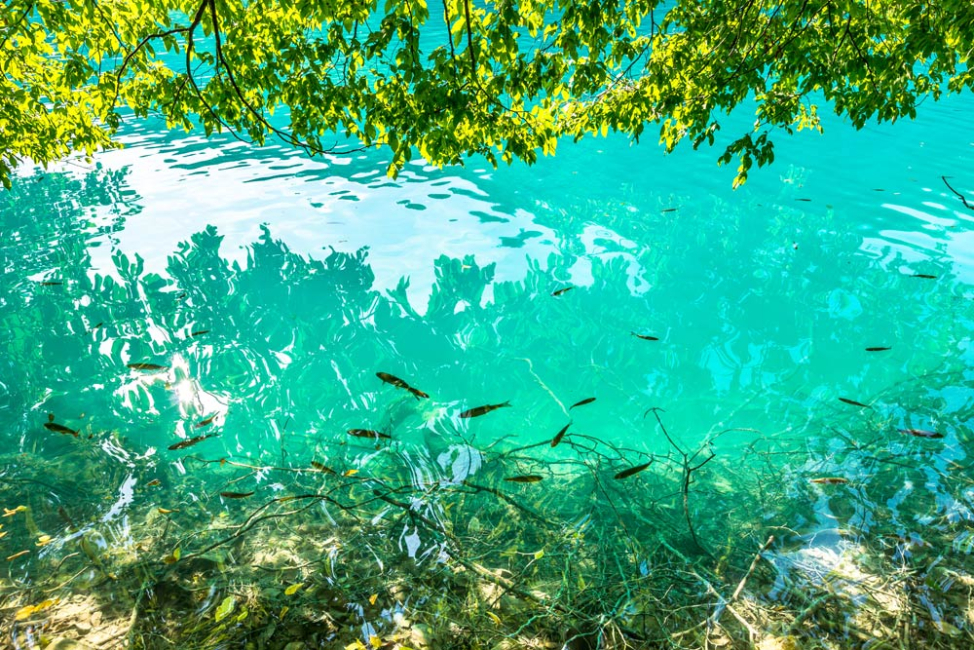
Benthic habitats are the ecological environments located at the bottom of aquatic systems, including streams, rivers, lakes, ponds, wetlands, estuaries, and oceans, where organisms live on, in, or near the underlying substrate. The term “benthic” refers specifically to the lowest zone of a water body, and these habitats encompass the physical, chemical, and biological conditions that exist at that interface between water and sediment.
In stormwater and freshwater systems, benthic habitats typically consist of substrates such as sand, gravel, cobble, silt, clay, and organic matter, along with any associated debris like woody material or leaf litter. The composition and stability of this substrate, along with factors such as water depth, flow velocity, temperature, dissolved oxygen levels, and sediment deposition, determine the suitability of the habitat for various organisms.
Benthic habitats support a wide range of organisms known as benthic communities, including macroinvertebrates such as insect larvae, worms, crustaceans, and mollusks, as well as microorganisms like bacteria and algae. These organisms play essential roles in aquatic ecosystems by breaking down organic material, recycling nutrients, and serving as a critical food source for higher trophic levels such as fish and amphibians. Because many benthic organisms have limited mobility and relatively long life cycles, they are particularly sensitive to environmental changes and are often used as indicators of water quality and ecosystem health.
In the context of stormwater management, benthic habitats are especially important because they are directly impacted by runoff. Elevated levels of suspended solids can settle out and accumulate in these habitats, a process known as sedimentation, which can smother organisms, fill in interstitial spaces within the substrate, and degrade habitat complexity. Pollutants attached to sediment particles, such as nutrients, heavy metals, and hydrocarbons, can also accumulate in benthic zones, leading to long-term contamination and ecological stress.
Hydrologic alterations caused by stormwater systems, including increased flow velocities and more frequent high-flow events, can further impact benthic habitats by causing erosion or scour of the streambed, destabilizing substrates, and displacing organisms. Conversely, excessive deposition in low-energy areas can bury habitats and reduce biodiversity.
Benthic habitats are foundational components of aquatic ecosystems, and their condition reflects the cumulative effects of watershed activities. Protecting and restoring these habitats is a key objective in stormwater management, as their health is closely tied to water quality, biological integrity, and the overall functioning of aquatic systems.