

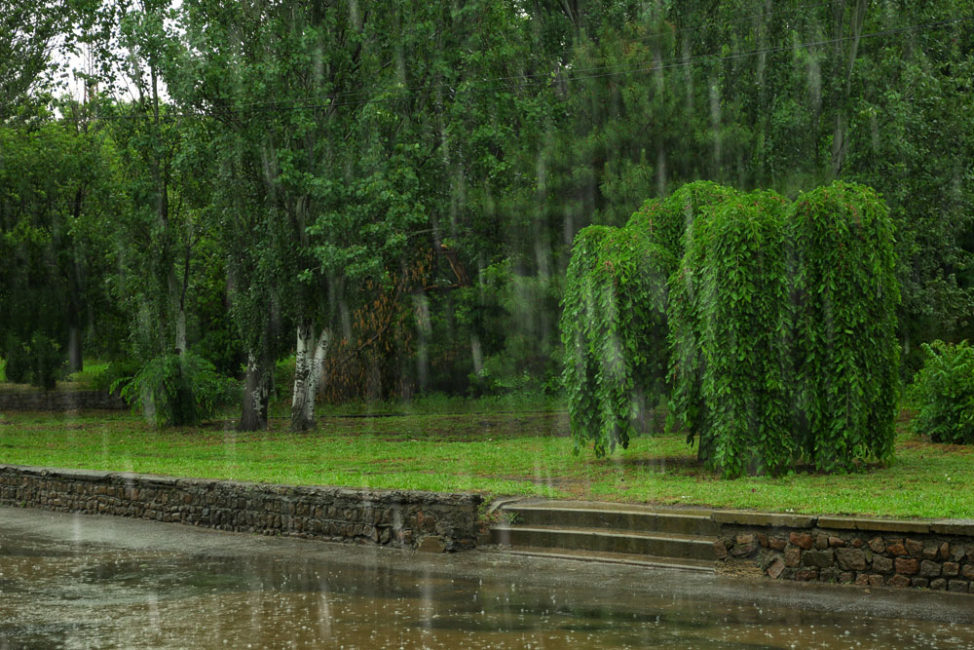
Stormwater is precipitation-derived water, including rain, snow, sleet, or ice melt, that flows over the land surface, infiltrates into the ground, evaporates, or is conveyed through natural and constructed drainage systems. In stormwater management, the term refers not only to the water itself but also to the hydrologic processes, infrastructure, and water quality impacts associated with its movement through a watershed following a precipitation event.
Stormwater originates when precipitation reaches the ground and exceeds the capacity of the land surface to intercept, infiltrate, or store it. In natural, undeveloped conditions, a large portion of this water is absorbed into the soil, taken up by vegetation, or returned to the atmosphere through evapotranspiration. The remainder becomes surface runoff, flowing overland into streams, wetlands, and other receiving waters. In developed environments, however, impervious surfaces such as roads, rooftops, and parking lots significantly reduce infiltration and increase both the volume and rate of runoff, fundamentally altering the natural hydrologic cycle.
From a hydrologic perspective, stormwater encompasses several interconnected pathways. These include surface runoff, which travels across land and impervious surfaces; shallow subsurface flow, where water moves laterally through the upper soil layers; and deep infiltration, where water percolates downward to recharge groundwater. The timing, magnitude, and distribution of these pathways are influenced by factors such as rainfall intensity and duration, soil texture, antecedent moisture conditions, land cover, slope, and watershed characteristics.
Stormwater is also a major vector for pollutant transport. As it flows over urban, suburban, and agricultural landscapes, it can pick up and carry a wide range of contaminants, including sediment, nutrients, heavy metals, hydrocarbons, pathogens, road salts, and debris. These pollutants may be present in dissolved form or attached to suspended particles, and their transport can degrade water quality in downstream rivers, lakes, estuaries, and coastal waters. Because stormwater is typically not treated before discharge in many systems, it is one of the leading sources of nonpoint source pollution.
In terms of infrastructure, stormwater is managed through a combination of natural features and engineered systems collectively referred to as stormwater management systems or drainage systems. These include conveyance elements such as gutters, catch basins, storm drains, pipes, swales, and channels, as well as control measures such as detention basins, retention basins, infiltration practices, and green infrastructure. These systems are designed to safely convey runoff, reduce flooding, control erosion, promote infiltration, and improve water quality.
Stormwater management is guided by both quantitative and qualitative objectives. Quantity control focuses on reducing peak flow rates and total runoff volumes to prevent flooding, channel erosion, and infrastructure damage. Quality control aims to remove or reduce pollutants through physical, chemical, and biological processes such as sedimentation, filtration, adsorption, and microbial transformation. Increasingly, modern approaches emphasize low impact development and green infrastructure strategies that seek to replicate natural hydrology by promoting infiltration, evapotranspiration, and on-site storage.
Stormwater also has important ecological and regulatory dimensions. Altered stormwater flows can destabilize stream channels, degrade aquatic habitats, and disrupt natural sediment transport processes. Regulatory frameworks, such as those established under the United States Environmental Protection Agency, often require municipalities and developers to implement stormwater controls to meet water quality standards and manage runoff impacts.
Overall, stormwater is not simply excess rainwater but a complex component of the hydrologic cycle that links land use, water quantity, water quality, infrastructure, and ecosystem health. Its management is a central concern in civil engineering, environmental protection, and sustainable land development.