

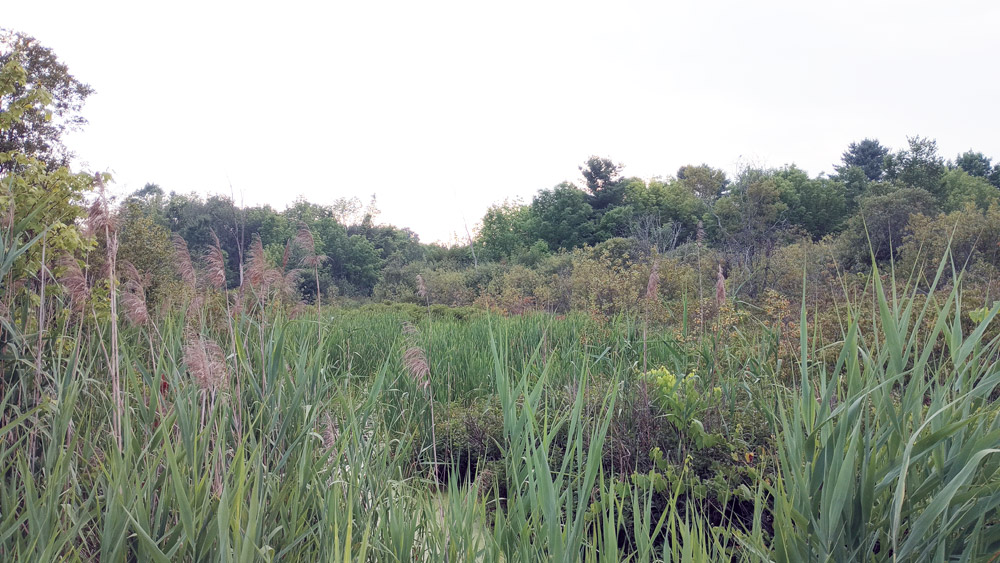
Wetlands are areas where water is present at or near the ground surface for sufficient durations during the growing season to create saturated soil conditions and support vegetation adapted to wet environments, known as hydrophytic vegetation. In stormwater management and environmental science, wetlands are defined by the presence of three key indicators: hydrology, hydric soils, and wetland vegetation.
Wetland hydrology refers to the periodic or sustained inundation or saturation of the soil, which creates anaerobic conditions. These conditions lead to the development of hydric soils, which exhibit distinct physical and chemical characteristics such as reduced oxygen, mottling, and organic matter accumulation. The third defining feature is vegetation composed of plant species adapted to saturated conditions, including grasses, sedges, rushes, and woody shrubs or trees that can tolerate low-oxygen soils.
Wetlands occur in a variety of forms, including marshes, swamps, bogs, and fens, and may be found along rivers and streams, in depressional areas, along lake and coastal margins, or in isolated inland settings. They may be permanently inundated, seasonally flooded, or intermittently saturated depending on local hydrology and climate.
From a stormwater management perspective, wetlands provide numerous important functions. They act as natural storage areas that attenuate peak flows and reduce flooding. They improve water quality by promoting sedimentation, filtration, and biological uptake of pollutants, including nutrients that can contribute to issues such as eutrophication. Wetlands also support groundwater recharge and discharge interactions, contributing to overall watershed balance.
Ecologically, wetlands are among the most productive and valuable ecosystems. They provide critical habitat for a wide range of plant and animal species, including many that are rare or protected. They also support biodiversity, stabilize shorelines, and contribute to carbon storage.
Because of their environmental importance, wetlands are often subject to regulatory protection, and activities that disturb or fill wetlands typically require permits and mitigation. In stormwater design, both natural wetlands and engineered systems such as constructed wetlands are used to manage runoff and enhance water quality.
Overall, wetlands serve as a vital interface between land and water, playing a key role in hydrologic processes, water quality protection, and ecosystem health.