

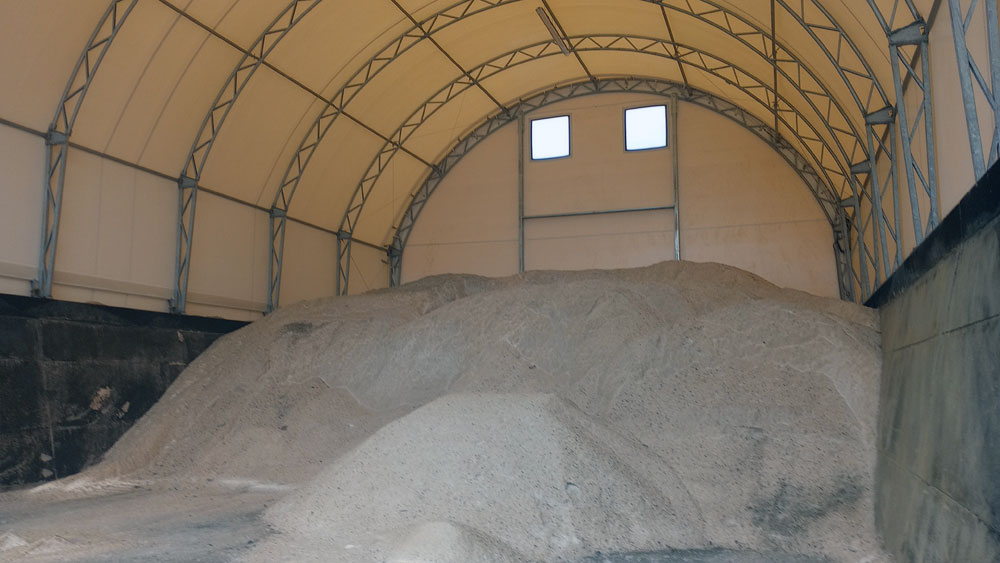
Road salt refers to chemical deicing agents, most commonly sodium chloride, that are applied to roadways, parking lots, and sidewalks during winter weather to prevent ice formation and to melt snow and ice that have already accumulated. In cold climates, road salt is a critical tool for maintaining safe travel conditions by lowering the freezing point of water, which helps keep surfaces passable during storms and freeze–thaw cycles.
In stormwater management, road salt is an important pollutant of concern because it is highly soluble and readily transported by meltwater and runoff. After application, dissolved salt is carried off impervious surfaces such as roads and parking areas during snowmelt or precipitation events, entering storm drains, ditches, and surface waters such as streams, rivers, and lakes. Unlike many other pollutants, salt does not degrade or break down over time, which means it can accumulate in the environment, particularly in soils, groundwater, and closed-basin waterbodies.
The primary environmental impact of road salt is the introduction of elevated chloride concentrations into receiving waters. High chloride levels can be toxic to aquatic organisms, disrupt osmoregulatory functions in fish and invertebrates, and alter the composition of aquatic ecosystems. In lakes and ponds, salt can also contribute to density stratification, where denser, salt-laden water sinks and inhibits normal mixing, potentially leading to low oxygen conditions near the bottom. In addition, salt can degrade soil structure, harm roadside vegetation, and mobilize other pollutants, such as heavy metals, making them more bioavailable.
Road salt can also infiltrate into the ground, especially in areas with permeable soils or where snow is stockpiled, leading to contamination of groundwater supplies. This is a concern for drinking water sources, as elevated sodium and chloride levels can affect taste and pose health considerations for individuals on sodium-restricted diets.
From a stormwater management perspective, reducing the impacts of road salt involves optimizing application rates, using alternative deicing materials where appropriate, improving storage and handling practices, and incorporating best management practices that reduce runoff and promote dilution or treatment before discharge. While road salt is essential for public safety in winter climates, its use requires careful management to balance safety with environmental protection.