

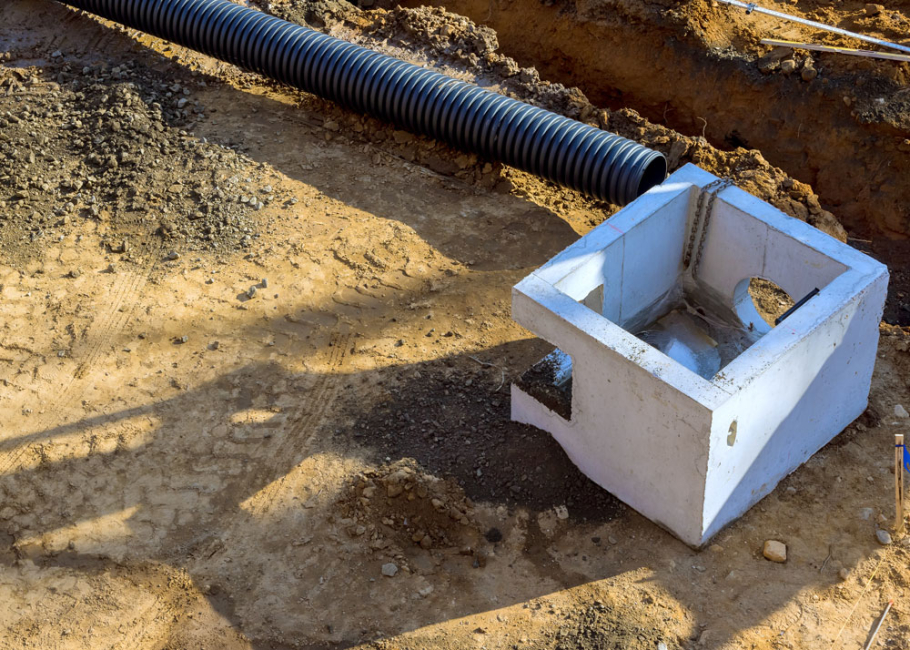
A catch basin is a stormwater collection structure designed to intercept, capture, and convey surface runoff from streets, parking lots, and other impervious areas into a storm drain system, while also providing limited pretreatment by trapping sediment and debris. It is one of the most common and recognizable components of urban stormwater infrastructure.
A typical catch basin consists of a grated or curb-opening inlet at the surface, a vertical structure (usually constructed of precast concrete, masonry, or similar materials), an outlet pipe connected to the storm sewer system, and a sump located below the outlet invert. As runoff enters the basin, heavier sediments, trash, and debris settle into the sump, where they are temporarily stored rather than being immediately conveyed downstream.
The primary function of a catch basin is hydraulic, meaning it efficiently collects and routes stormwater into the drainage network to prevent roadway flooding and maintain safe travel conditions. However, it also serves a secondary water quality function by removing coarse sediments, floatables, and some associated pollutants through gravitational settling and simple screening at the inlet.
The effectiveness of a catch basin as a treatment device is limited and depends heavily on maintenance. Without regular cleaning, accumulated sediment and debris can fill the sump, reducing storage capacity and allowing pollutants to pass through more easily. In extreme cases, clogged inlets can lead to localized flooding. For this reason, catch basins are typically included in routine municipal maintenance programs.
Catch basins may be configured in different ways depending on site conditions. Some include hooded outlets or internal baffles to improve the capture of floatable materials such as oils and trash. Others may be combined with sumpless designs or modified inlets for specific applications. Despite these variations, the fundamental purpose remains the same: to intercept runoff and provide initial sedimentation before discharge to the storm sewer system.
From a stormwater management perspective, catch basins are considered a pretreatment practice rather than a standalone Best Management Practice (BMP). They are most effective when used in conjunction with downstream treatment systems such as detention basins, bioretention areas, or filtration practices, which provide more comprehensive pollutant removal.
A catch basin is a basic but essential stormwater structure that collects surface runoff, conveys it into the drainage system, and captures coarse sediment and debris through a sump. While not highly effective for fine pollutant removal, it plays a critical role in both drainage and preliminary water quality protection when properly maintained.