

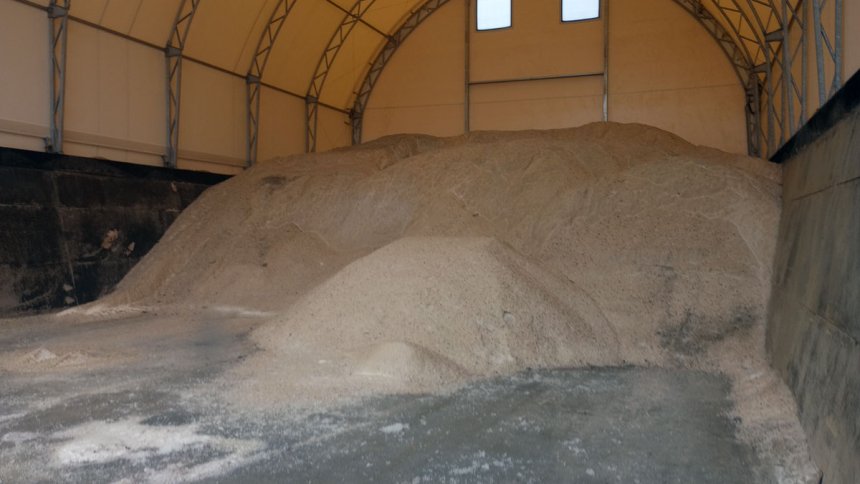
Road salt keeps winter roads passable, but the sodium and chloride left behind threaten drinking-water wells, freshwater lakes, and roadside ecosystems. Over the past decade, and especially since 2023, Northeastern states have launched an array of legislative, technical, and educational initiatives to strike a safer balance between mobility and water quality.
Statewide roadmap. The 2023 Adirondack Road Salt Reduction Task Force report—created under the 2020 “Randy Preston Road Salt Reduction Act” - details 23 recommendations, from mandating GPS-calibrated spreaders to expanding use-of-brine pilots and creating a real-time chloride monitoring network. (dec.ny.gov)
Lake George laboratory. Around Lake George, the Lake George Association and the Rensselaer Polytechnic-IBM “Jefferson Project” deploy high-frequency sensors and fund municipal spreader-calibration clinics; their goal is a 50 % salt-load cut by 2030. (lakegeorgeassociation.org)
Voluntary, but influential, training. Since 2013 the Department of Environmental Services has run the Green SnowPro certification for private contractors and, more recently, municipalities. Certified operators learn brine blending, live-edge plow use, and “just-in-time” application, earning liability protection if they follow best practices, an incentive that now covers more than 1,100 professionals. (des.nh.gov)
Agency of Transportation doctrine. VTrans’ 2024-25 Snow & Ice Control Plan prioritizes pre-wetted salt and direct-applied brine, especially near chloride-impaired streams, to “avoid excess salt near impaired waterways.” (vermontpublic.org)
House Bill 86 (2025). Pending legislation would create a statewide volunteer program that trains municipal and commercial plow drivers on reduced-salt techniques, mirroring New Hampshire’s model. (wcax.com)
Pre-mix zones. MassDOT designates “reduced-salt areas” and uses a calcium-chloride/rock-salt pre-mix effective at lower temperatures, cutting total tonnage on sensitive corridors. (mass.gov)
Salt Remediation Program. When roadside wells exceed sodium or chloride thresholds, the agency investigates and funds treatment or replacement, creating a financial incentive to keep salt use low. (mass.gov)
MaineDOT pre-treats with 23 % salt brine up to three days before a storm and retrofits tankers so one truck can coat three lanes, reducing granular salt demand by 20–30 %. (maine.gov)
Drivers see white stripes before a storm, 23 % sodium-chloride brine applied up to 72 hours in advance, to stop snow from bonding and let plows scrape almost to bare pavement, requiring less follow-up salt. (portal.ct.gov)
Brine production. PennDOT now operates 65 in-house brine plants and used 12.6 million gallons in the 2021-22 season, cutting granular salt needs while keeping roads at Level-of-Service targets. (pa.gov)
Legislative push. A February 2025 House bill proposes setting annual salt-use reduction targets for PennDOT and encourages biodegradable additives (e.g., beet juice) to stretch chloride further. (timesobserver.com)
| Practice | Benefit | Where It’s Growing |
|---|---|---|
| Liquid anti-icing (23 % brine) | Prevents bond formation; 10–40 % less salt overall | CT, ME, MA, NH, NY, PA, VT |
| Spread-er calibration & GPS data-loggers | Real-time rate control; accountability | NY pilot, NH Green SnowPro fleets |
| Operator certification | Transfers science to plow cabs; lowers liability | NH, VT (proposed), private contractors in NY |
| Public outreach (Winter Salt Awareness Week) | Engages residents & businesses in salt-smart habits | PA regional partner: Stroud Water Research Center (paenvironmentdaily.blogspot.com) |
The Northeast’s mix of legislation, technology, and training shows a clear trajectory: road salt is no longer the “cheap and easy” default but a carefully metered chemical with rising environmental costs. Continued investment in brine infrastructure, sensor-driven data, and operator education offers a realistic path to meeting chloride-TMDL limits without sacrificing winter safety.