

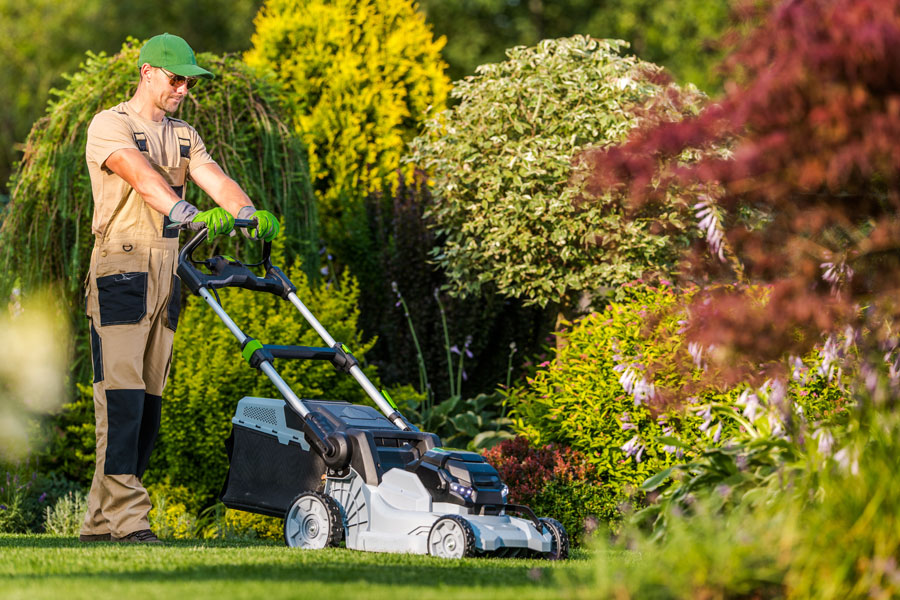
For decades, the ideal suburban yard has been defined by a single image, a uniform carpet of bright green grass, edged with ornamental shrubs and kept pristine through fertilizers, pesticides, and frequent watering. It is neat, predictable, and widely accepted as a symbol of care and success. But from an environmental and even practical standpoint, that version of a “perfect” yard is far from healthy.
A truly healthy suburban yard looks a little different. It is still attractive, still intentional, but it works with nature instead of constantly fighting it.
A healthy yard begins with diversity. Instead of a monoculture lawn, it incorporates a mix of grasses, native plants, and groundcovers. Native species are especially important because they are adapted to local rainfall, soil conditions, and seasonal changes. That means they require less watering, no chemical assistance, and far less maintenance overall. You might still have areas of turf for recreation or aesthetics, but they are balanced with planting beds, pollinator gardens, or naturalized edges that provide habitat and visual variety.
Soil health is the real foundation of a successful yard. In the conventional model, soil is often treated as an inert medium that needs to be “fed” with fertilizers. In a healthier approach, soil is alive. It contains organic matter, microorganisms, and earthworms that naturally cycle nutrients. Leaving grass clippings on the lawn, adding compost, and minimizing disturbance all help build this living system. When the soil is healthy, plants are more resilient, and the need for chemical inputs disappears.
Water management is another defining feature. A healthy yard is designed to absorb and use rainfall where it lands, rather than shedding it quickly into the street or storm drain. Slight depressions, rain gardens, and deeper-rooted plants allow water to infiltrate the soil. This reduces runoff, prevents erosion, and helps recharge groundwater. Lawns that are cut slightly higher, rather than scalped, also retain moisture better and develop stronger root systems.
Plant selection plays a major role. A healthy yard avoids invasive species that can spread beyond property lines and disrupt local ecosystems. Instead, it favors regionally appropriate plants that support pollinators like bees and butterflies, as well as birds and other wildlife. Flowering plants that bloom at different times of year provide continuous food sources, while shrubs and small trees add structure and habitat.
Maintenance practices also shift in a healthier yard. Instead of frequent mowing, chemical treatments, and irrigation schedules, the focus is on observation and light intervention. Mowing may be less frequent and set to a higher blade height. Weeds are managed through soil health and plant density rather than herbicides. Irrigation, if used at all, is supplemental rather than routine.
Visually, a healthy suburban yard may appear a bit less rigid than the traditional lawn, but it is not unkempt. It has defined spaces, intentional plant groupings, and a sense of design. Edges can be clean, paths can be clear, and gathering areas can still feel polished. The difference is that the landscape reflects natural patterns rather than forcing everything into uniformity.
There is also a broader benefit. When many homes in a neighborhood adopt these practices, the cumulative effect is significant. Reduced fertilizer and pesticide use improves local water quality. Increased infiltration reduces strain on stormwater systems. Expanded habitat supports biodiversity even in suburban settings.
In the end, a healthy suburban yard is not about abandoning aesthetics, it is about redefining them. It values resilience over perfection, function over uniformity, and long-term sustainability over short-term appearance. It still looks good, but more importantly, it works.