

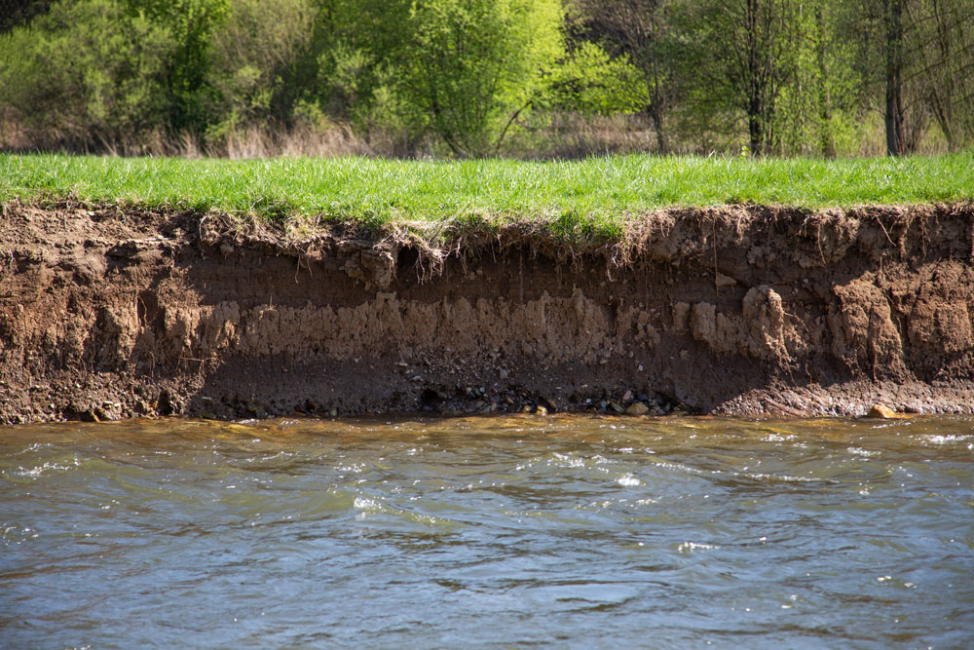
Erosion potential is the likelihood or susceptibility of soil, sediment, or channel material to be detached, transported, and removed by erosive forces, primarily flowing water in the context of stormwater management. It reflects how easily a given surface or material can be eroded under specific hydrologic and hydraulic conditions.
In stormwater and watershed analysis, erosion potential is governed by a combination of hydraulic forces and material resistance. The driving forces include flow velocity, shear stress, turbulence, and runoff volume, all of which increase the ability of water to dislodge and transport particles. Opposing these forces are the properties of the soil or channel material, such as grain size, cohesion, compaction, organic content, and the presence of stabilizing vegetation. Cohesive soils like clays may resist detachment but can fail in larger masses once erosion begins, while non-cohesive soils like sands and silts are more easily mobilized.
Erosion potential is also strongly influenced by land use and surface conditions. Disturbed areas, exposed soils, steep slopes, and construction sites typically have high erosion potential due to the lack of protective cover and increased runoff. In contrast, well-vegetated areas with stable root systems and surface roughness tend to have lower erosion potential, as vegetation reduces flow velocity, enhances infiltration, and protects the soil surface from direct rainfall impact.
In channels and drainage systems, erosion potential is often evaluated in terms of permissible shear stress or velocity, which represent thresholds beyond which channel materials will begin to erode. If stormwater flows exceed these thresholds, channel degradation, bank instability, and sediment transport can occur.
From a stormwater management perspective, erosion potential is a critical consideration in the design of conveyance systems, outfalls, and best management practices. High erosion potential may necessitate the use of stabilization measures such as riprap, vegetation, erosion control blankets, or energy dissipation structures to prevent damage and downstream sedimentation.
Simply put, erosion potential is the measure of how vulnerable a soil or surface is to being worn away by flowing water, determined by the balance between erosive forces and the resistance of the material.