

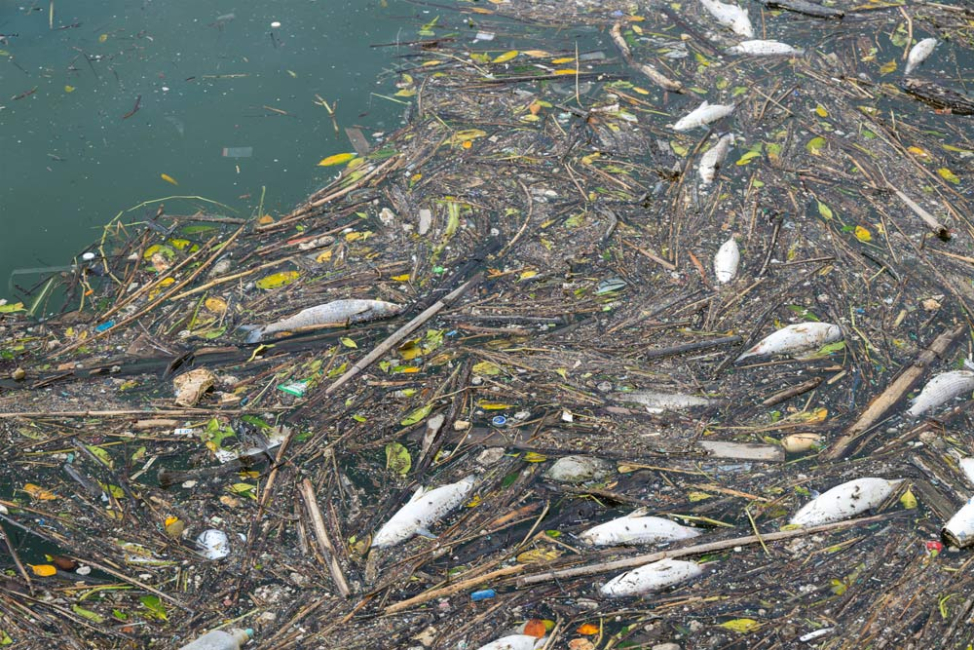
Fish kill refers to a sudden and often large-scale mortality event in a population of fish within a waterbody such as a stream, river, lake, pond, or estuary. In stormwater management and water quality contexts, a fish kill is an important indicator of severe environmental stress or pollution, often signaling that conditions in the water have become unsuitable to support aquatic life.
Fish kills are most commonly associated with low dissolved oxygen levels, a condition known as hypoxia or, in extreme cases, anoxia. When oxygen concentrations in the water drop below the level needed to sustain fish respiration, fish may become stressed, suffocate, and die. This oxygen depletion is frequently linked to excessive nutrient loading, particularly nitrogen and phosphorus from stormwater runoff, which stimulates rapid algal and aquatic plant growth. When these organisms die and decompose, microbial activity consumes large amounts of dissolved oxygen, leading to conditions that can trigger a fish kill.
In addition to oxygen depletion, fish kills can result from a variety of other stormwater-related factors. These include the introduction of toxic substances such as hydrocarbons, heavy metals, pesticides, or other pollutants washed off impervious surfaces during rainfall events. Sudden changes in water temperature, pH, or salinity, sometimes caused by heated runoff or illicit discharges, can also stress or shock fish populations. High sediment loads from erosion can clog fish gills, reduce light penetration, and degrade habitat, further contributing to mortality events.
Stormwater systems can exacerbate fish kill conditions by rapidly conveying polluted runoff into receiving waters without sufficient treatment. First-flush events, in particular, can deliver concentrated loads of pollutants that have accumulated on surfaces between storms. In urban areas, the combination of nutrient enrichment, organic matter, and contaminants makes waterbodies especially vulnerable.
From a management perspective, fish kills are both an environmental concern and a regulatory issue, as they often indicate violations of water quality standards. Preventing fish kills involves controlling pollutant sources, reducing nutrient loading, improving stormwater treatment, and maintaining healthy aquatic habitats that can better withstand environmental stressors.