

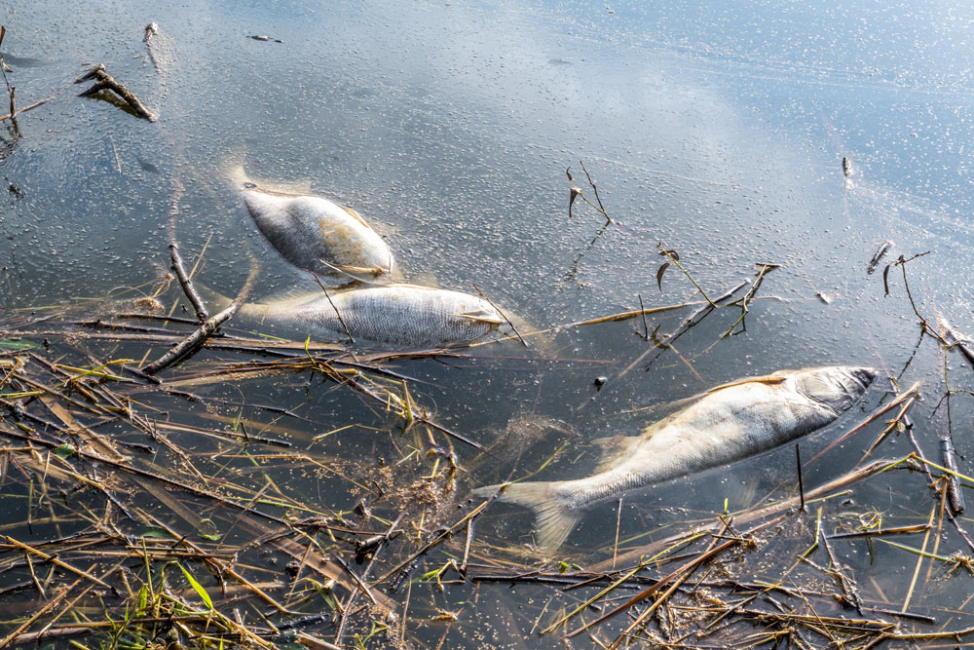
Hypoxia is a condition in aquatic systems where dissolved oxygen (DO) concentrations fall below levels necessary to sustain most aerobic aquatic life, typically defined as less than about 2 milligrams per liter (mg/L). In stormwater management and water quality contexts, hypoxia is a critical indicator of ecological stress and impaired water bodies.
Hypoxia most commonly develops when excessive nutrients, particularly nitrogen and phosphorus from stormwater runoff, wastewater discharges, or agricultural inputs, stimulate rapid growth of algae and aquatic plants. This process, known as eutrophication, increases organic biomass in the water column. When this biomass dies, it is decomposed by aerobic microorganisms, which consume dissolved oxygen in the process. If oxygen consumption exceeds the rate of oxygen replenishment, such as through atmospheric reaeration or photosynthesis, DO levels decline, leading to hypoxic conditions.
In stratified systems such as lakes, reservoirs, and estuaries, hypoxia often occurs in bottom waters, or the hypolimnion, where limited mixing prevents oxygen from being replenished from the surface. In these environments, stormwater-driven inputs of organic matter and nutrients can exacerbate oxygen depletion by increasing biological oxygen demand. Fine sediments transported by runoff can also settle and contribute to oxygen demand as they decompose.
Hypoxia has significant implications for stormwater management because it reflects the cumulative impact of pollutant loading from a watershed. It can result in fish kills, loss of benthic organisms, altered nutrient cycling, and the release of pollutants such as phosphorus and metals from sediments under low-oxygen conditions. In severe cases, prolonged hypoxia can lead to anoxia, which is the complete absence of dissolved oxygen.
Managing hypoxia involves controlling upstream sources of nutrients and organic matter through best management practices such as stormwater detention and retention systems, green infrastructure, and erosion and sediment control measures. These practices aim to reduce pollutant loads, moderate flow regimes, and improve overall water quality before runoff reaches receiving waters.