

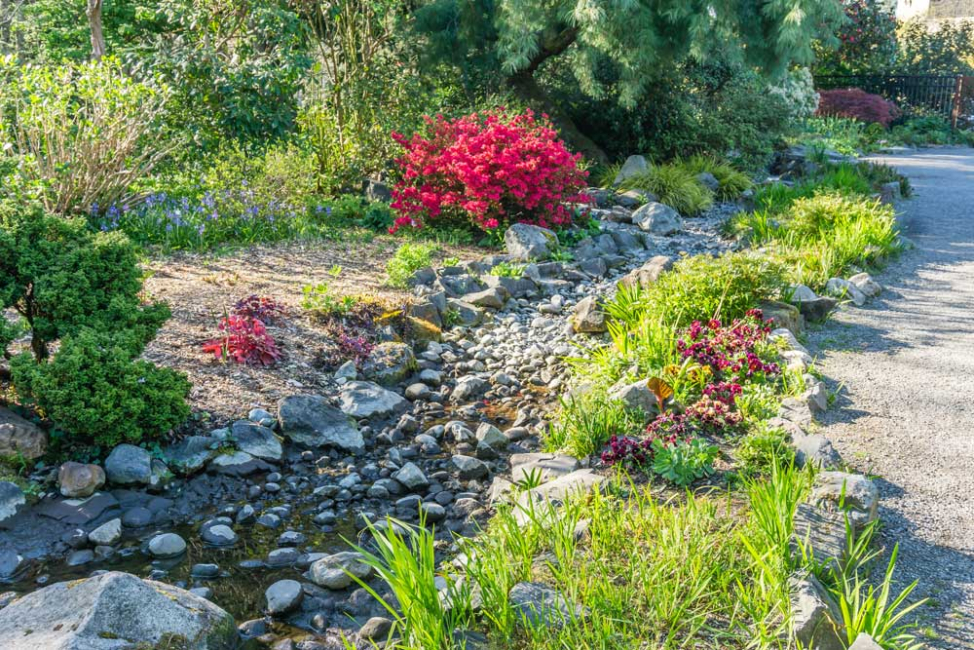
Rain garden is a shallow, vegetated stormwater management practice designed to capture, temporarily store, and infiltrate runoff from impervious or disturbed surfaces, such as rooftops, driveways, roads, and parking areas. It is a type of bioretention system that uses engineered soils and plantings to reduce runoff volume, improve water quality, and mimic natural hydrologic processes.
A rain garden typically consists of a shallow depression filled with a specially designed soil mix that promotes infiltration while supporting plant growth. It is planted with a combination of grasses, perennials, shrubs, or small trees, often selected for their tolerance to both wet and dry conditions. Beneath the surface, the system may include an aggregate layer and, in some cases, an underdrain to manage excess water where native soils have limited permeability.
From a hydrologic perspective, rain gardens intercept stormwater and reduce the generation of overland flow by allowing water to pond temporarily and infiltrate into the soil. This process helps decrease peak discharge rates, reduce total runoff volume, and promote groundwater recharge.
Rain gardens also provide significant water quality benefits. As stormwater filters through the soil and vegetation, pollutants such as sediment, nutrients, metals, and hydrocarbons are removed through processes including filtration, adsorption, microbial activity, and plant uptake. This helps protect downstream receiving waters from contamination and reduces the risk of impacts such as eutrophication.
In addition to their functional benefits, rain gardens enhance site aesthetics, support pollinators and wildlife, and contribute to green infrastructure and low impact development strategies. They are commonly used in residential, commercial, and municipal settings as a decentralized approach to managing stormwater at its source.
Overall, rain gardens are an effective and adaptable practice that integrates landscape design with stormwater management to improve both environmental performance and site quality.