

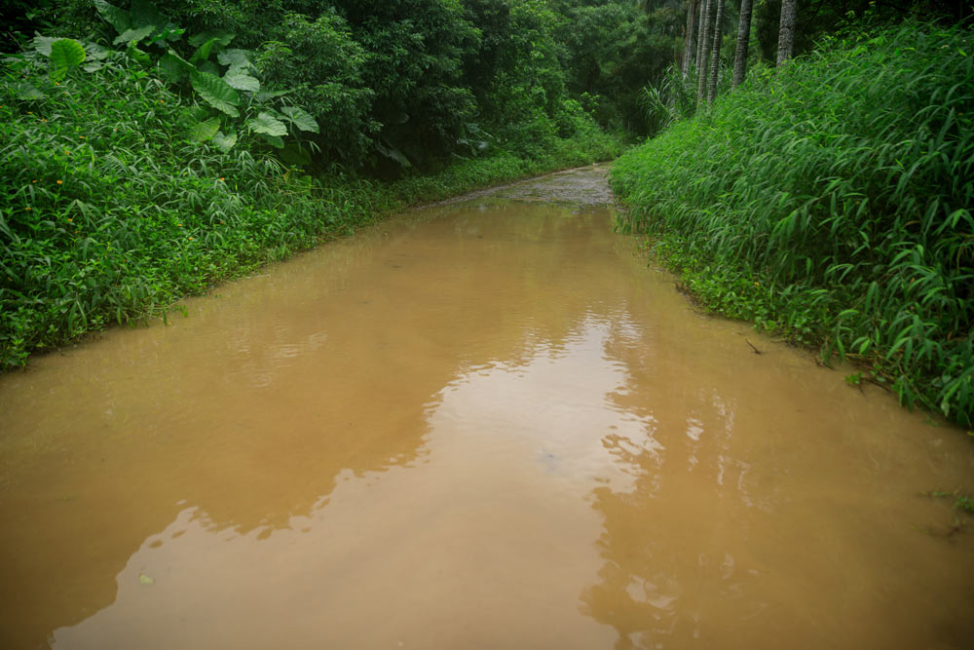
Resuspension is the process by which previously settled sediment particles are re-entrained into the water column after having been deposited on the bottom of a channel, basin, or other stormwater conveyance or storage feature.
In stormwater management, resuspension occurs when hydraulic forces such as increased flow velocity, turbulence, or shear stress acting on the bed exceed the critical threshold required to mobilize deposited particles. This commonly happens during higher-intensity runoff events, where previously captured sediments in detention basins, sediment basins, swales, or natural channels are disturbed and carried back into suspension.
The process is strongly influenced by factors such as particle size, density, and cohesion, as well as bed conditions and flow characteristics. Coarser particles like sand require higher velocities to become resuspended, while finer particles such as silt and clay can be re-entrained more easily, especially if they remain loosely consolidated. Organic matter and biofilms can either stabilize sediments or contribute to their mobilization depending on site conditions.
Resuspension is an important consideration in the design and performance of stormwater best management practices, because it can reduce overall pollutant removal efficiency. Sediments often act as carriers for nutrients, heavy metals, hydrocarbons, and other contaminants, so when they are resuspended, these associated pollutants are also reintroduced into the water column and may be transported downstream.
To minimize resuspension, stormwater systems are typically designed to limit turbulence and maintain low flow velocities within treatment practices, especially near outlets. Features such as energy dissipators, baffles, forebays, and stabilized bottoms are often incorporated to reduce the likelihood that settled sediments will be disturbed during subsequent storm events.