

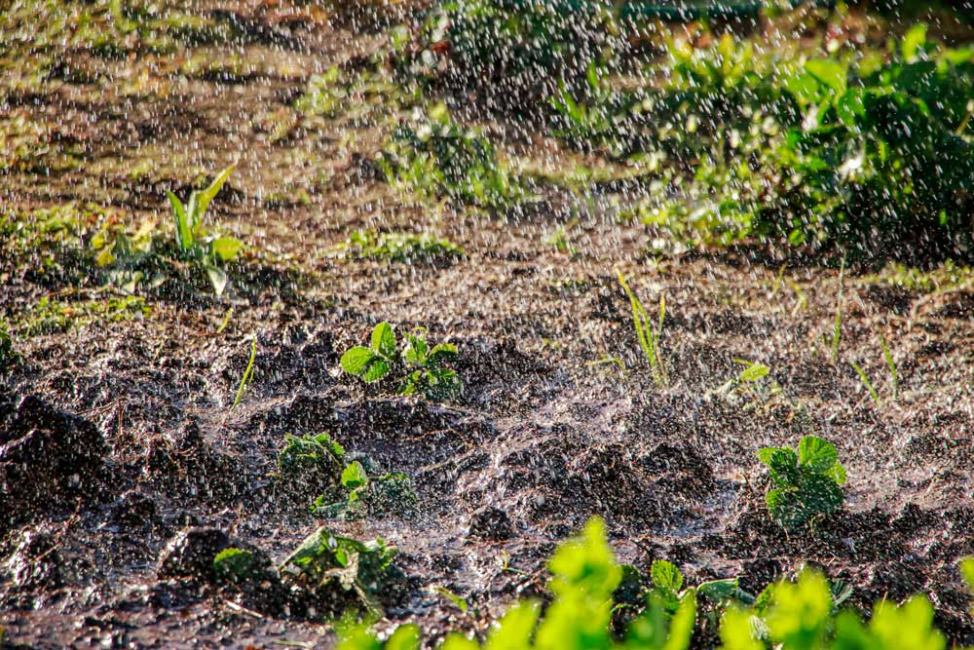
Splash erosion is the initial stage of the erosion process in which soil particles are detached and displaced by the impact of falling raindrops on an exposed soil surface. It is a fundamental mechanism of soil particle detachment that often precedes and contributes to other forms of erosion, including sheet erosion and subsequent concentrated flow processes.
When a raindrop strikes bare or sparsely vegetated soil, it exerts a localized force that can dislodge fine particles from the soil surface. The kinetic energy of the raindrop is transferred to the soil, breaking apart aggregates and propelling particles upward and outward in all directions. These particles may be lifted several inches into the air and moved laterally across the surface, where they can clog soil pores, reduce infiltration capacity, and contribute to surface sealing or crust formation.
Although splash erosion does not involve the organized transport of sediment by flowing water, it plays a critical role in making soil particles available for transport. Once detached, these particles are more easily carried away by shallow overland flow, leading to sheet erosion and, eventually, more concentrated forms such as rill and gully erosion.
Splash erosion is most pronounced on exposed soils, such as construction sites, agricultural fields, and recently disturbed areas, where protective cover like vegetation, mulch, or pavement is absent. Soil type also influences susceptibility, with fine, loosely aggregated soils being more vulnerable to detachment.
In stormwater management, controlling splash erosion is essential for preventing the initiation of sediment transport. Common control measures focus on protecting the soil surface from direct raindrop impact, including the use of vegetative cover, mulch, erosion control blankets, and other surface stabilization techniques. These practices help dissipate rainfall energy and maintain soil structure, thereby reducing the likelihood of particle detachment at the source.