

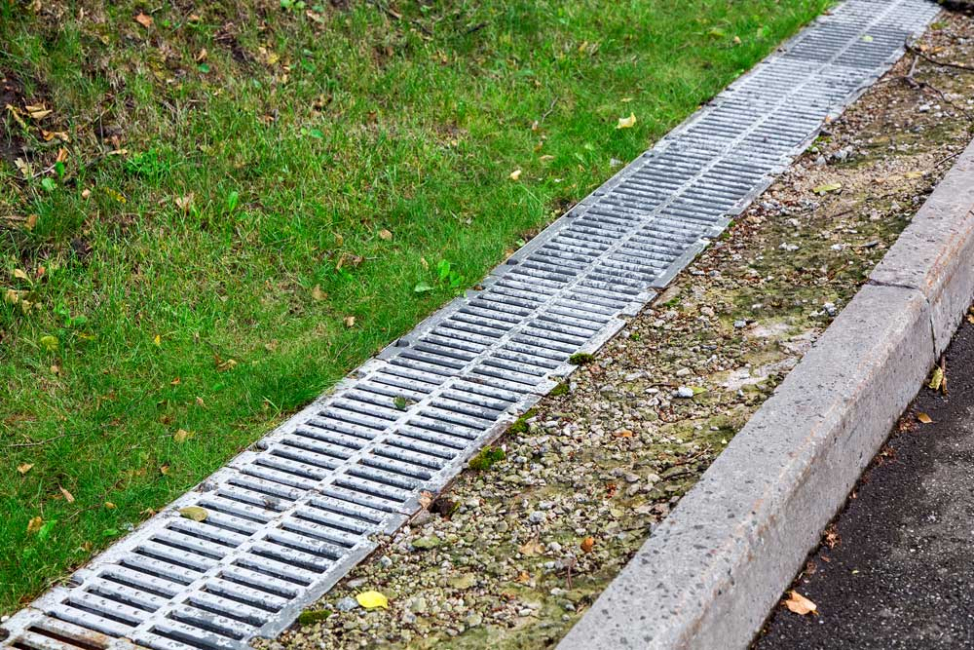
A trench drain is a linear surface drainage system designed to capture and convey stormwater runoff along a narrow, elongated channel, typically covered by a grate. It consists of a shallow trench or channel installed flush with or slightly below the surrounding surface, paired with a removable grate that allows water to enter while preventing debris and larger objects from clogging the system. The collected water is then directed through the channel to an outlet such as a storm sewer, culvert, or other drainage facility.
In stormwater management, trench drains are used to intercept sheet flow across impervious or semi-impervious surfaces such as roadways, parking lots, driveways, sidewalks, loading areas, and industrial sites. Their linear configuration makes them particularly effective for capturing runoff over a continuous edge or along low points where water tends to accumulate. By quickly removing surface water, trench drains help reduce localized flooding, improve safety by minimizing standing water, and limit the transport of pollutants across paved areas.
Hydraulically, trench drains function as open-channel conveyance systems, with their capacity determined by factors such as channel dimensions, slope, grate design, and outlet conditions. Proper design must account for expected runoff volumes, debris loading, and maintenance access. If undersized or poorly maintained, trench drains can become clogged or overwhelmed, leading to bypass flow or surface ponding.
From a water quality perspective, trench drains primarily serve a conveyance role rather than treatment, although they may be paired with downstream best management practices such as sediment traps, oil-water separators, or infiltration systems to address pollutant removal. Routine maintenance, including grate cleaning and sediment removal from the channel, is essential to ensure long-term functionality and prevent blockages.