

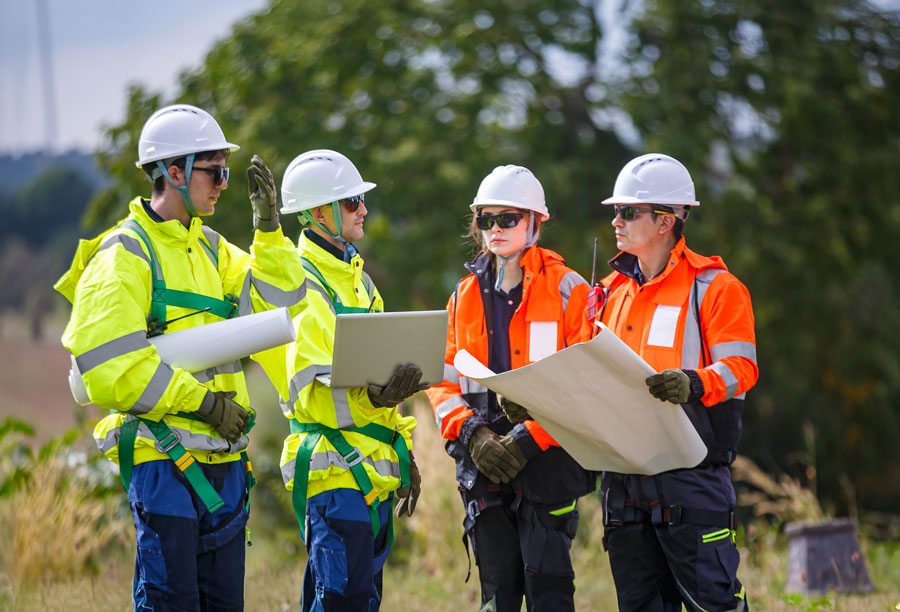
Training field crews to support asset management goals is one of the most overlooked, yet most impactful, steps a municipality can take when trying to build a reliable stormwater or roadway asset program. You can invest in the best software, develop detailed capital improvement plans, and establish clear policies, but if the data coming from the field is inconsistent, incomplete, or misunderstood, the entire system begins to break down. Asset management is only as strong as the information feeding it, and that responsibility often rests in the hands of field crews.
At its core, asset management depends on accurate, repeatable data collection. Field crews are the ones locating outfalls, inspecting culverts, documenting catch basins, and identifying deficiencies. If they are not properly trained on what to look for, how to rate condition, or how to record findings, the resulting dataset becomes unreliable. This can lead to poor prioritization, misallocated funding, and missed opportunities to address failures before they escalate. Training, therefore, is not just about compliance or onboarding, it is about building the foundation of decision-making.
One of the most important elements of training is standardization. Crews need clear, consistent guidance on how to evaluate assets in the field. For example, what defines a “failing” culvert versus one that is simply aging, or how severe erosion must be before it is flagged as a priority issue. Without shared definitions and examples, two crew members can inspect the same asset and produce completely different results. Developing visual guides, condition rating scales, and simple field manuals helps eliminate subjectivity and ensures that data collected across teams is comparable.
Equally important is training crews on the “why” behind the work. Field staff are far more engaged when they understand how their efforts connect to larger municipal goals. Explaining how inspection data feeds into capital planning, regulatory compliance, or emergency response helps crews see the value in being thorough and accurate. When staff recognize that a properly documented outfall inspection today could prevent a costly failure or environmental violation tomorrow, the quality of their work naturally improves.
Technology training also plays a critical role. Many municipalities are moving away from paper forms and spreadsheets toward mobile data collection tools and GIS-based asset systems. While these tools can dramatically improve efficiency and data quality, they can also create frustration if crews are not comfortable using them. Training should include hands-on practice with devices, clear workflows for data entry, and troubleshooting guidance for common issues encountered in the field. The goal is to make technology feel like an asset, not an obstacle.
Another key component is feedback and continuous improvement. Training should not be treated as a one-time event. Supervisors and program managers should regularly review collected data, identify inconsistencies, and provide constructive feedback to crews. This creates a loop where field practices are constantly refined, and data quality steadily improves over time. Periodic refresher trainings, especially before peak inspection seasons, can reinforce expectations and introduce any updates to procedures or standards.
Cross-training can further strengthen asset management efforts. When crews understand multiple asset types, such as drainage, signage, and roadway features, they become more efficient and capable of identifying issues beyond their primary assignment. This broader awareness often leads to better overall system observations, since many infrastructure problems are interconnected. A crew inspecting a culvert, for instance, may also notice upstream drainage issues or downstream erosion that would otherwise go unreported.
Safety training should also be integrated into asset management efforts rather than treated as a separate initiative. Many inspections take place in challenging environments, including confined spaces, roadways with traffic, or unstable embankments. Ensuring that crews can safely access and evaluate assets is essential, not only for their well-being but also for maintaining consistent inspection coverage. Safe crews are more confident, and confident crews produce better data.
Ultimately, training field crews to support asset management goals is about alignment. It aligns people, processes, and technology toward a shared objective, which is building a clear, accurate understanding of infrastructure conditions. Municipalities that invest in this alignment tend to see stronger datasets, more defensible decision-making, and more efficient use of limited resources.
In many ways, asset management does not begin in the office or within a software platform. It begins in the field, with a crew member standing in front of a culvert, an outfall, or a catch basin, making observations that will influence decisions for years to come. When those observations are informed, consistent, and purposeful, the entire system works as intended. When they are not, even the most advanced asset management program will struggle to deliver meaningful results.