

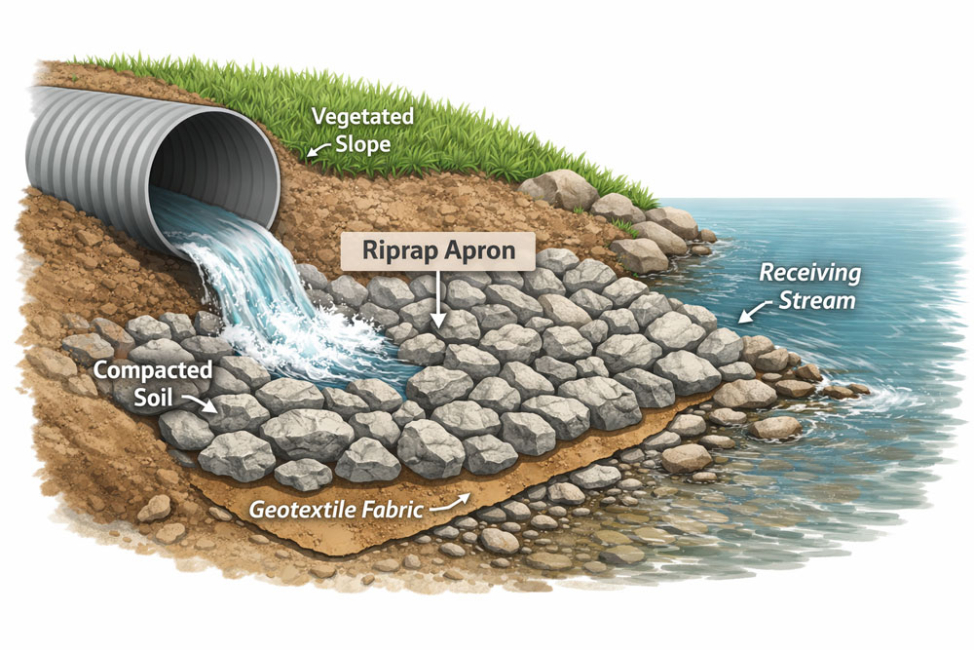
An apron is a protective layer of material, typically placed at the inlet or outlet of a hydraulic structure such as a culvert, pipe, or stormwater outfall, that is designed to stabilize the underlying soil and prevent erosion caused by flowing water. Aprons are most commonly constructed of durable materials such as riprap, concrete, grouted stone, or articulated concrete blocks, depending on the expected flow velocities and site conditions.
In stormwater management, aprons serve a critical function in dissipating the energy of concentrated flows as they exit a conveyance system. When water is discharged from a pipe or culvert, it often has sufficient velocity to scour the downstream channel or surrounding soils. The apron spreads and slows this flow, reducing shear stress on the receiving surface and minimizing the risk of erosion, undercutting, or structural failure.
Aprons may also be used at inlets to protect against scour where water enters a system, particularly in areas where flow becomes concentrated. The size, thickness, and extent of an apron are determined based on hydraulic calculations, including flow rate, velocity, tailwater conditions, and soil characteristics. Proper design ensures that the apron remains stable during design storm events and integrates effectively with adjacent channel protection measures.
In addition to erosion control, aprons can contribute to overall system longevity by protecting infrastructure from undermining and by reducing sediment transport into downstream channels. As such, they are a standard and essential component of well-designed stormwater conveyance systems.