

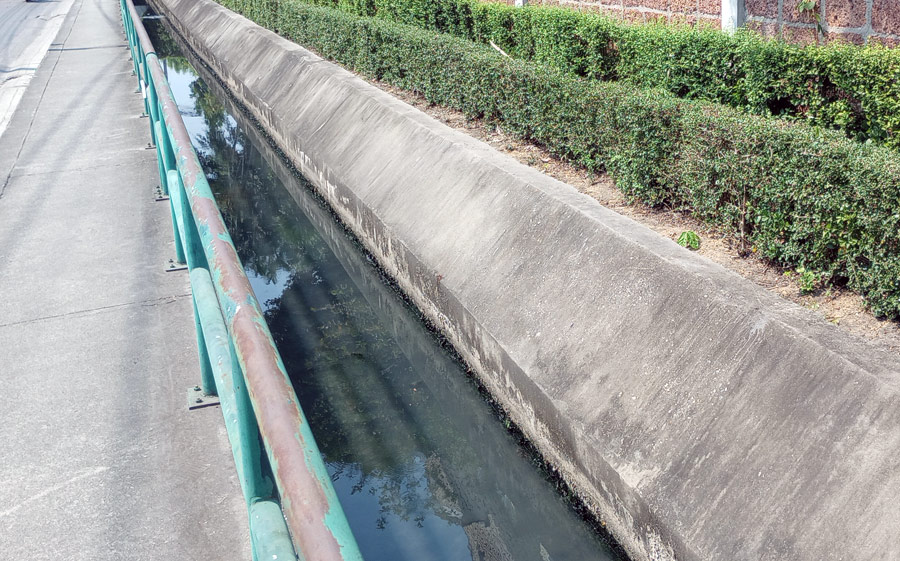
Channel lining is the application of a protective material to the bed and/or banks of a drainage channel to stabilize the surface, reduce erosion, and improve the hydraulic performance of stormwater conveyance. It is used in both natural and engineered channels to protect against the erosive forces of flowing water, particularly in areas with high velocities, steep slopes, or erodible soils.
The primary purpose of a channel lining is erosion control. As stormwater flows through a channel, it exerts shear stress on the channel boundaries. If the native soil is unable to resist these forces, the channel may experience scour, bank failure, sediment transport, and progressive degradation. A properly selected lining increases the resistance of the channel surface, preventing erosion and maintaining the intended shape and capacity of the channel over time.
Channel linings can be broadly categorized into rigid and flexible systems. Rigid linings, such as cast-in-place concrete, grouted stone, or articulated concrete blocks, provide high resistance to erosion and are typically used in high-velocity or high-risk applications. However, they can increase flow velocities and reduce ecological value. Flexible linings, such as vegetation, riprap, turf reinforcement mats, and geotextiles, conform to the underlying soil and can absorb energy, making them suitable for moderate flow conditions while offering environmental and aesthetic benefits.
Vegetated linings, including grass-lined channels and bioswales, are widely used in stormwater management because they provide both hydraulic conveyance and water quality treatment. Vegetation slows flow velocities, promotes infiltration, and filters sediments and pollutants. However, vegetated linings require proper establishment and maintenance to remain effective.
The selection of an appropriate channel lining depends on several factors, including design flow velocity, channel slope, soil characteristics, expected maintenance, and environmental considerations. Engineers often evaluate permissible shear stress or velocity thresholds to ensure the chosen lining will remain stable under design conditions.
While channel linings enhance stability, they also influence flow behavior. Smoother linings, such as concrete, reduce friction and increase velocity, which can lead to downstream erosion if not properly managed. Rougher linings, such as vegetation or rock, increase resistance, slow flow, and dissipate energy.
Channel lining is a protective treatment applied to drainage channels to prevent erosion, maintain structural integrity, and control flow characteristics. It is a critical design element in stormwater systems, balancing hydraulic efficiency with long-term stability and environmental performance.