

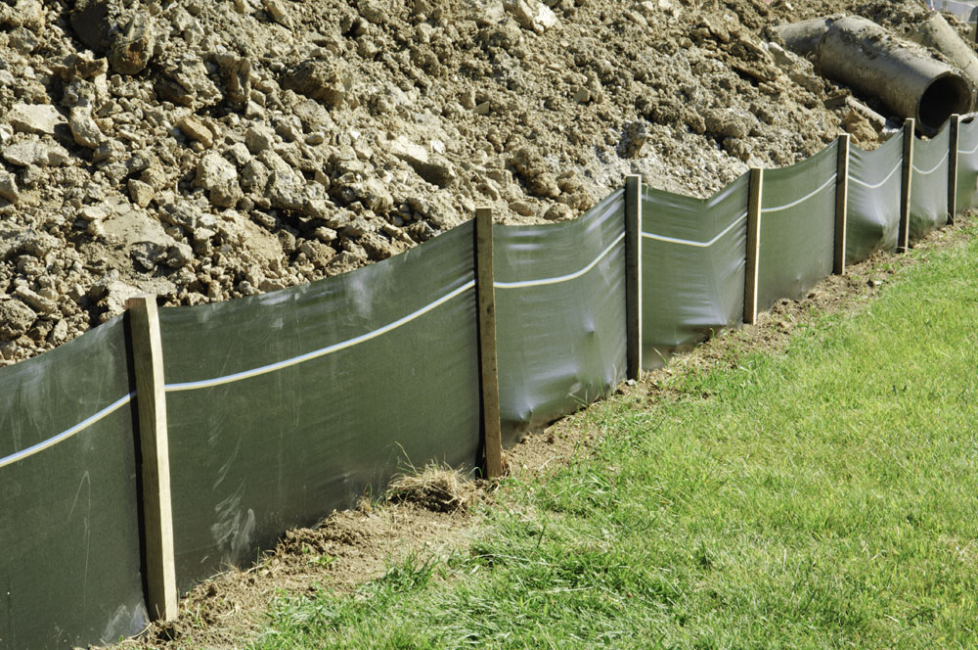
A silt fence is a temporary sediment control measure used in stormwater management and construction activities to intercept, detain, and promote the settling of sediment-laden runoff before it leaves a disturbed site. It typically consists of a geotextile filter fabric that is stretched between and attached to a series of posts, with the lower edge of the fabric trenched into and backfilled with soil to prevent water from flowing underneath the barrier.
Silt fences are installed along the downslope perimeter of construction areas, stockpiles, or other exposed soils where erosion may occur. As stormwater runoff flows toward the fence, the fabric slows the velocity of the water, allowing suspended soil particles, particularly coarse sediments like sand and silt, to settle out on the upstream side. The geotextile material permits water to pass through while retaining sediment, functioning primarily as a filtering and ponding device rather than a structural barrier.
In stormwater management, silt fences are classified as an erosion and sediment control best management practice, intended for short-term use during land-disturbing activities. They are most effective when installed on relatively small drainage areas with shallow, low-velocity sheet flow, and they are not suitable for concentrated flows, channels, or areas with high runoff volumes. Proper installation, including adequate trenching, post spacing, and fabric support, is essential to ensure performance, as improperly installed silt fences are prone to failure through overtopping, undercutting, or collapse.
Regular inspection and maintenance are also critical. Accumulated sediment must be removed when it reaches a certain height, typically about one-half the height of the fence, to maintain storage capacity and prevent failure. Once construction activities are complete and the site is stabilized with vegetation or other permanent measures, the silt fence is removed.