

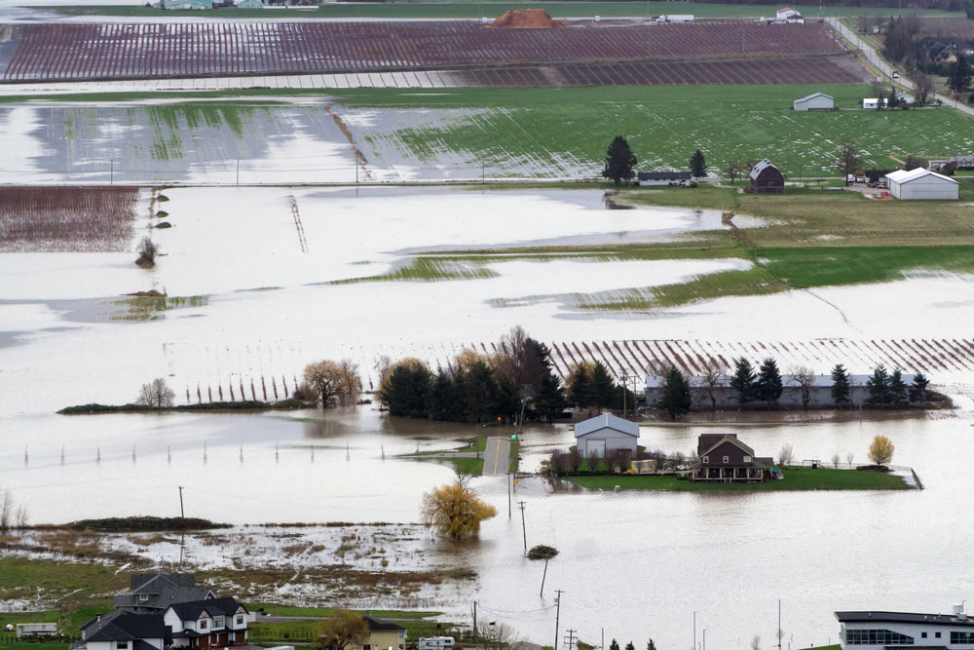
Saturation-excess runoff is a runoff generation mechanism that occurs when the soil becomes fully saturated, meaning all available pore space within the soil is filled with water, and any additional precipitation or inflow can no longer infiltrate. Under these conditions, excess water flows over the land surface as runoff, even if rainfall intensity is relatively low.
In stormwater management and hydrology, saturation-excess runoff is fundamentally controlled by the antecedent moisture condition of the soil rather than rainfall intensity alone. When soils are already wet from prior precipitation, snowmelt, or a high groundwater table, their capacity to absorb additional water is greatly reduced or eliminated. Once saturation is reached, even light rainfall can produce immediate surface runoff.
This process is most commonly associated with variable source area hydrology, in which runoff is generated from specific portions of a watershed that become saturated, typically in low-lying areas, near streams, in depressions, or where the water table intersects the ground surface. These saturated zones can expand during wet periods and contract during dry periods, dynamically influencing where and how runoff is produced within a watershed.
Saturation-excess runoff differs from infiltration-excess runoff, also known as Hortonian flow, in that it does not require rainfall intensity to exceed the soil’s infiltration capacity. Instead, runoff occurs because the soil has no remaining storage capacity. This distinction is critical in humid regions, where saturation-excess runoff is often the dominant runoff mechanism, particularly in areas with shallow soils, compacted soils, or poor drainage.
From a stormwater management perspective, saturation-excess runoff is important because it is closely linked to groundwater interactions, baseflow contributions, and pollutant transport. Runoff generated from saturated areas can mobilize nutrients, sediments, and contaminants that accumulate on or near the soil surface. It also presents challenges for stormwater control practices, as traditional infiltration-based systems may be ineffective or fail in already saturated conditions.
Saturation-excess runoff is the generation of surface runoff due to fully saturated soil conditions, where any additional water input, regardless of intensity, results in overland flow because infiltration is no longer possible.