

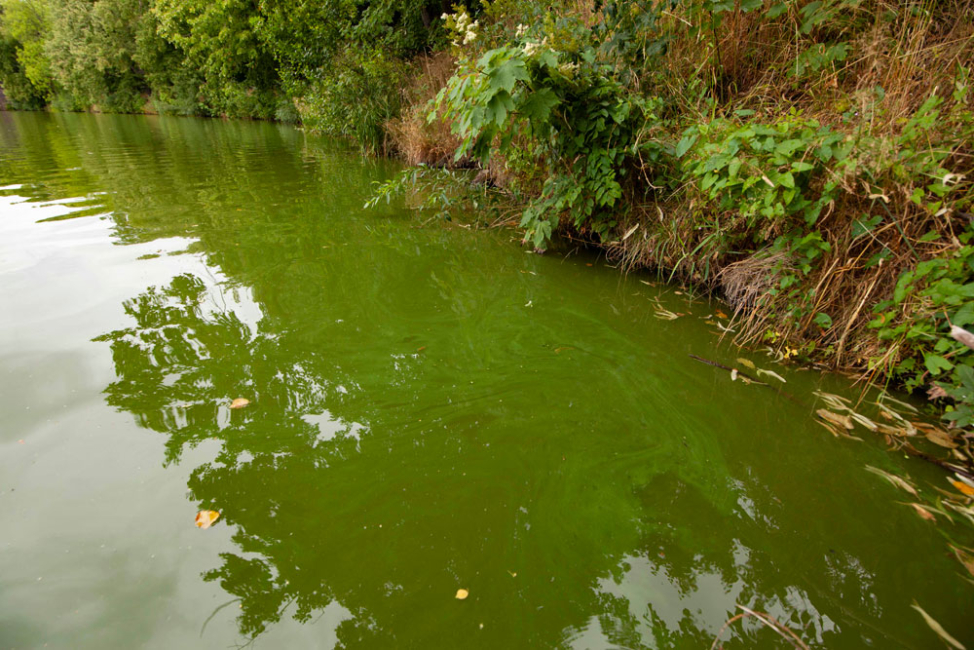
Cyanobacteria are a group of photosynthetic microorganisms, commonly referred to as “blue-green algae,” that are naturally present in freshwater, marine, and terrestrial environments. Despite the informal name, they are not true algae, but rather bacteria that possess the ability to perform photosynthesis using sunlight, carbon dioxide, and water to produce energy and oxygen.
In stormwater management and water quality contexts, cyanobacteria are significant because they can rapidly multiply under favorable conditions, particularly in nutrient-rich waters. This rapid growth is known as a cyanobacterial bloom or harmful algal bloom. These blooms are typically driven by elevated concentrations of nutrients such as nitrogen and phosphorus, warm temperatures, slow-moving or stagnant water, and sufficient sunlight, all of which are commonly influenced by stormwater runoff from urban, suburban, and agricultural areas.
Cyanobacteria are important for several reasons related to stormwater systems and receiving waters. They can produce toxins, known as cyanotoxins, which pose risks to human health, pets, livestock, and aquatic ecosystems. Exposure can occur through drinking water, recreational contact, or ingestion of contaminated water. Blooms can also degrade water quality by reducing dissolved oxygen levels when the organisms die and decompose, leading to hypoxic or anoxic conditions that stress or kill fish and other aquatic life. In addition, dense blooms can impair aesthetics, clog infrastructure such as intake structures, and interfere with water treatment processes.
From a stormwater management perspective, controlling cyanobacteria is closely tied to reducing nutrient loading, improving flow conditions, and promoting infiltration and treatment practices that limit the delivery of excess nutrients to surface waters. Practices such as green infrastructure, detention and retention systems, and erosion and sediment controls all play a role in mitigating the conditions that favor cyanobacterial growth.
Cyanobacteria are naturally occurring, photosynthetic bacteria that become problematic in stormwater-impacted systems when excess nutrients and favorable environmental conditions lead to harmful blooms, with significant ecological, public health, and infrastructure implications.
Image credit: “Podzámecký pond infested with cyanobacteria due to overfishing, July 2023” by Lucie Voříšková, via Wikimedia Commons, licensed under CC BY 4.0 (https://creativecommons.org/licenses/by/4.0/)