

Thermal shock is a rapid and significant change in temperature that causes physiological stress, injury, or death to aquatic organisms, or physical stress and damage to materials and infrastructure. In stormwater management, water quality, and aquatic ecology, the term most commonly refers to the sudden increase or decrease in water temperature within a stream, river, pond, lake, or wetland that exceeds the ability of aquatic organisms to adapt.
Thermal shock often occurs when stormwater runoff that has been heated by impervious surfaces such as asphalt parking lots, roadways, rooftops, and sidewalks is rapidly discharged into a receiving waterbody during a rainfall event. During hot weather, pavement temperatures can greatly exceed air temperatures, causing runoff to become significantly warmer than the stream or pond receiving it. Conversely, thermal shock can also occur when unusually cold water is released into a warmer waterbody.
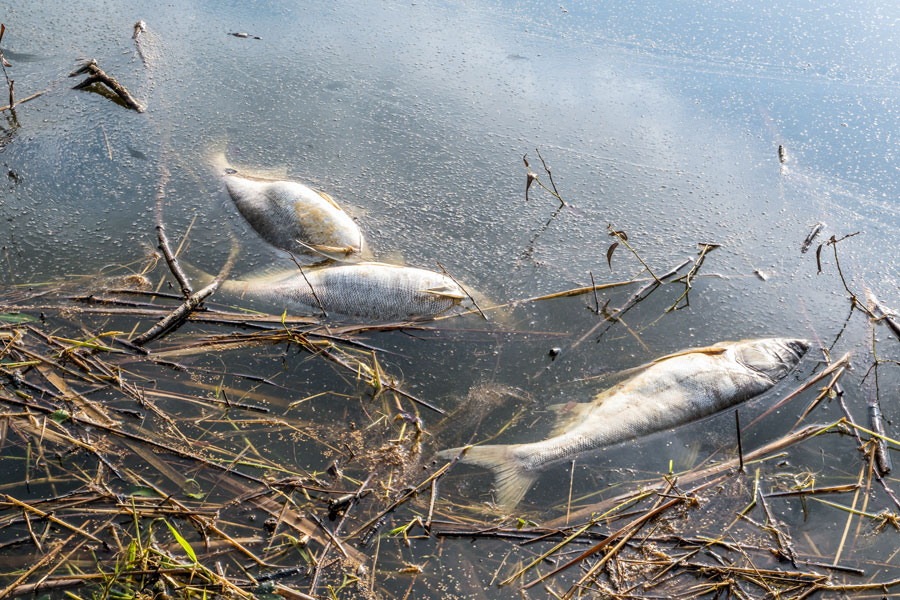
Many aquatic organisms are highly sensitive to abrupt temperature changes. Fish, amphibians, aquatic insects, mussels, and other aquatic species have evolved to tolerate gradual seasonal temperature fluctuations, but sudden temperature shifts can disrupt metabolism, respiration, reproduction, feeding behavior, growth, and immune function. Severe thermal shock can result in fish kills, reduced biodiversity, changes in species composition, and the loss of temperature-sensitive species.
Cold-water species are particularly vulnerable. Fish such as brook trout, salmon, and certain aquatic macroinvertebrates require relatively stable, cool water temperatures. A surge of heated stormwater entering a stream during summer can raise temperatures enough to cause stress or mortality, even if the elevated temperature lasts only a short time.
Thermal shock is closely associated with thermal pollution, but the terms are not identical. Thermal pollution refers to the overall degradation of water quality caused by elevated or altered temperatures. Thermal shock specifically describes the harmful effects resulting from a rapid temperature change.
Stormwater management practices designed to reduce thermal shock include minimizing directly connected impervious surfaces, increasing infiltration, preserving riparian vegetation, shading streams, using bioretention systems and infiltration practices, disconnecting runoff pathways, restoring wetlands, and designing stormwater ponds and treatment systems to prevent the release of excessively warm surface waters. These measures help moderate runoff temperatures and reduce sudden thermal fluctuations in receiving waters.
Therefore, thermal shock is the harmful stress or damage caused by a sudden change in temperature, most commonly occurring when stormwater runoff rapidly alters the temperature of a receiving waterbody faster than aquatic organisms can adapt.