

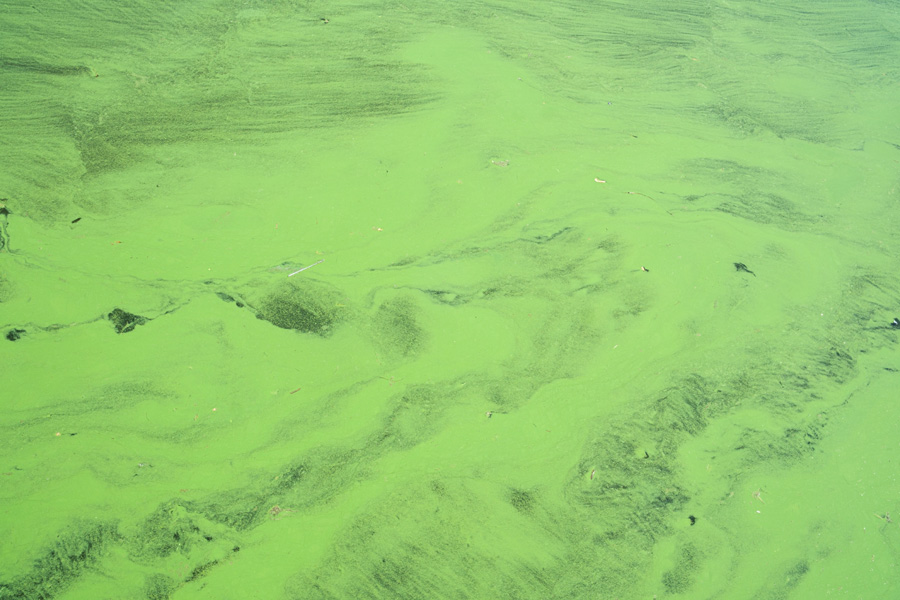
Algal blooms are rapid increases in the population and biomass of algae within a water body, typically driven by elevated concentrations of nutrients, warm temperatures, adequate sunlight, and relatively stagnant or slow-moving water conditions. In stormwater management and water quality contexts, algal blooms are most often associated with excessive inputs of nitrogen and phosphorus delivered through runoff from developed and agricultural landscapes.
These blooms can manifest as green, blue-green, brown, or even reddish discoloration of the water, sometimes forming surface scums or dense suspended growth that reduces water clarity. A particularly concerning type of algal bloom involves cyanobacteria, often referred to as blue-green algae, which can produce harmful toxins known as cyanotoxins. These harmful algal blooms, commonly abbreviated as HABs, pose risks to human health, pets, livestock, and aquatic life.
From a stormwater management perspective, algal blooms are a direct indicator of nutrient enrichment and are closely tied to the broader process of eutrophication. When stormwater conveys fertilizers, organic matter, pet waste, or other nutrient sources into ponds, lakes, or slow-moving streams, it can create ideal conditions for bloom formation. Stormwater detention and retention basins, especially those with long residence times and limited circulation, are particularly susceptible.
The impacts of algal blooms extend beyond aesthetics. As the algae die and decompose, microbial activity consumes dissolved oxygen in the water, which can lead to hypoxic or anoxic conditions. This oxygen depletion can result in fish kills and degradation of aquatic habitats. Additionally, dense blooms can interfere with recreational use, clog infrastructure, and complicate water treatment processes.
Managing algal blooms within stormwater systems typically involves reducing nutrient inputs at the source, improving pretreatment practices such as sediment forebays or vegetated buffers, enhancing circulation or aeration in basins, and maintaining stormwater infrastructure to prevent nutrient buildup. As such, algal blooms are both a symptom of underlying watershed issues and a key consideration in the design and management of effective stormwater systems.